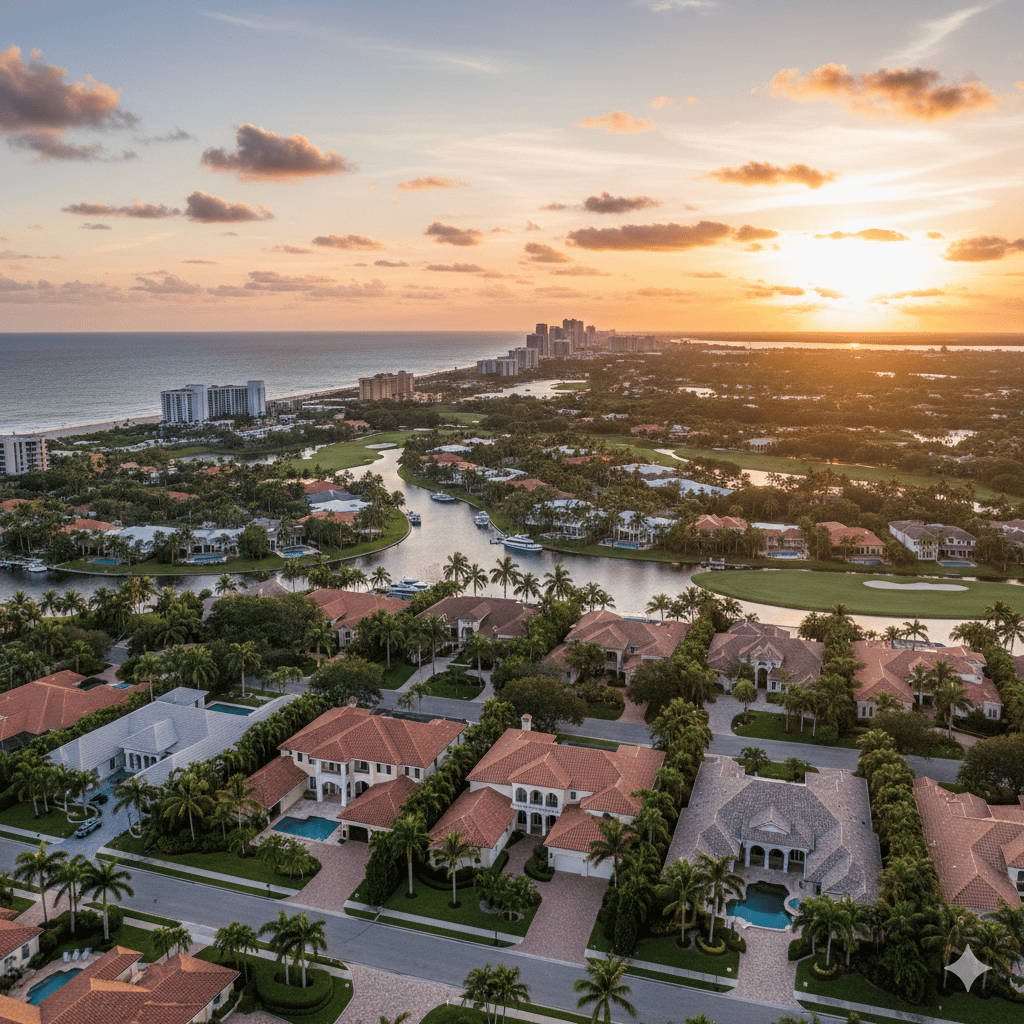
Safest Neighborhoods in Boca Raton for Homebuyers
If you’re considering buying a home in Boca Raton, safety is not a “nice-to-have.” It’s the foundation. For security-conscious families, high-earning professionals, and relocating executives, choosing the right neighborhood is about more than finishes, square footage, or a pretty listing photo. It’s about peace of mind, privacy, and protecting your lifestyle and your investment.
Boca Raton is widely known for its upscale communities, strong property values, and desirable quality of life. But not every area offers the same level of day-to-day security. Understanding where the safest neighborhoods in Boca Raton tend to cluster (and why) helps you buy with clarity instead of second-guessing your decision later.
In this guide, you’ll get a buyer-grade breakdown of Boca’s safest community types, the real-world differences between gated and non-gated areas, how HOA governance impacts safety, and what to check at both the neighborhood and property level. You’ll also get practical checklists, decision frameworks, and examples to help you move fast without cutting corners.
Quick Takeaways: Key Points for Safety-Focused Buyers
- Safety is a system, not a vibe. The safest neighborhoods in Boca Raton pair lower-risk patterns with strong governance, controlled access, and smart street design.
- Property crime is usually the real issue. Buyers often fear violent crime, but day-to-day risk is more commonly theft, package issues, and vehicle break-ins in many suburban markets.
- Gates only work when enforced. A “gated” label means nothing if the gate is open, broken, or loosely monitored.
- HOA strength is a leading indicator. Maintenance standards, rental rules, and security budgets affect safety perception and resale strength.
- School zones matter beyond school. Strong school demand tends to attract longer-term residents and stabilize neighborhoods.
- Your lifestyle determines your best fit. Families, frequent travelers, and high-visibility executives often need different security setups.
- Evaluate both the neighborhood and the home. You can buy in a top community and still create avoidable risk if the property is exposed.
Why Safety Is the #1 Priority for Today’s Boca Raton Buyers
Safety isn’t only emotional. It’s financial. In markets like Boca Raton, neighborhoods that buyers perceive as secure tend to maintain stronger demand in changing market conditions. When demand stays deeper, you usually see better liquidity: more showings, more offers, and less price pressure. That matters if you plan to upgrade later, relocate again, or protect equity long-term.
For families, safety is about routines: school drop-offs, after-school activities, evening walks, and letting your kids exist outside without you feeling like a full-time bodyguard. For high-earning professionals and executives, safety often means privacy and predictability: fewer unknown visitors, less solicitation, controlled entry points, and an environment that doesn’t create exposure.
City-level platforms regularly present Boca as relatively favorable compared to broader benchmarks, but they also highlight an important reality: property crime is often the day-to-day concern, not violent crime. See examples of how different platforms break down violent vs. property categories at NeighborhoodScout and Niche.
Unique insight: The safest neighborhoods aren’t always the most expensive. They’re often the most controlled. Think of safety like friction. The more friction a community creates for outsiders (limited entry points, visible monitoring, consistent rule enforcement), the fewer “easy opportunities” exist for opportunistic issues.
How We Evaluated Safety in Boca Raton Neighborhoods
Online lists love to declare “Top 10 safest neighborhoods” like that’s the full story. It isn’t. To evaluate the safest neighborhoods in Boca Raton in a way that’s actually helpful for real buyers, we use a layered approach. You want data, yes, but you also want reality checks that data can’t capture.
1) Crime data (city-level + neighborhood-level context)
We cross-reference multiple sources to avoid over-trusting a single platform. NeighborhoodScout provides crime estimates and “safest area” lists on its Boca pages; Niche provides category breakdowns and safety grades; and CrimeGrade offers map-style risk shading. Each measures differently, so the goal is pattern recognition, not worshiping one number. Relevant sources include: NeighborhoodScout, CrimeGrade, and Niche.
2) Access control and enforcement
This is where secure gated communities in Boca Raton can shine—when they’re actually run correctly. We consider whether gates are staffed or monitored, whether access is enforced, whether patrols exist, and whether the community has consistent operational standards.
3) Neighborhood design (opportunity reduction)
Street design changes outcomes. Neighborhoods with fewer cut-through roads and clearer sightlines often reduce random traffic, which reduces “opportunity” incidents. Lighting, visibility, and predictable traffic patterns matter in the real world.
4) Buyer risk profile (how you live)
A frequent traveler has different needs than a family with three kids. A high-visibility executive has different concerns than a quiet professional couple. Your lifestyle changes your definition of “safe.”
Important note: Even official city information can include disclaimers about how crime data should be interpreted. See the City of Boca Raton’s crime info page for context: City of Boca Raton Crime Info. That’s why we combine data with practical evaluation.
Understanding Crime Patterns in Boca Raton
Most buyers assume safety is a single question: “Is this city safe?” Real buyers quickly learn it’s a set of questions: “Safe from what?” “Safe when?” and “Safe for how I live?”
Violent crime vs. property crime: what buyers actually experience
In many suburban luxury-leaning markets, violent crime is not what most residents experience day-to-day. Property crime is often the bigger practical concern: theft, vehicle break-ins, and opportunistic incidents. You can see how platforms categorize and compare these risks on NeighborhoodScout and Niche.
East Boca vs. West Boca: why it feels different
The “feel” of safety can change based on traffic volume, proximity to retail corridors, and neighborhood layout. Areas with higher visitor traffic can experience more opportunity-based incidents simply because there are more unknown variables. Master-planned communities often reduce those variables through limited entry points and consistent management.
Seasonal shifts and “visibility risk”
South Florida can shift with seasonality and occupancy patterns. That doesn’t mean panic; it means planning. A safety-focused buyer thinks about how exposure changes during peak season, during renovations, and during move-in windows.
Unique insight: Safety perception often lags reality. Some areas improve before reputations catch up, and other areas decline quietly when governance weakens. Smart buyers look at enforcement and upkeep as leading indicators.
The Safest Areas in Boca Raton (High-Level Overview)
Buyers searching for the best safe places to live in Boca Raton usually end up choosing between a few “safe archetypes.” The archetype matters because it determines what kind of security system you’re buying into.
1) Guard-gated country club communities
These communities often combine controlled entry with staffing, patrol routines, and strong standards. Even if you never touch golf, the operating system is what many buyers pay for: predictability, maintenance, and an environment built to reduce friction.
2) Master-planned HOA communities
These often offer consistent lighting, signage, landscaping visibility, and rule enforcement. The result is a neighborhood that stays “tight” over time—important for families and relocating professionals.
3) Low-density residential corridors
These can be excellent when they have stable ownership, limited cut-through traffic, and strong community pride. Non-gated doesn’t mean unsafe—it means you need to evaluate design and behavior more carefully.
4) Secured luxury condo buildings
A well-managed building can offer surprisingly strong safety: controlled entry, key-fob access, cameras, and onsite staff. For frequent travelers, this can be an underrated option.
Unique insight: Buyers over-focus on “east vs. west” or “price equals safety.” A better question is: How controlled is the environment? Controlled environments tend to outperform for peace of mind and resale.
Custom Visual Concepts to Include in This Article
Image Concept 1: Boca Raton Safety Map & Neighborhood Zones
What it shows: A stylized Boca Raton map divided into zones: dark green for top-tier controlled communities, light green for stable low-risk residential areas, yellow for moderate-risk/high-traffic areas, and orange for “extra due diligence” zones. Include icons for guarded gates, top school zones, strong HOAs, and high visibility corridors.
Alt text: Map showing the safest neighborhoods in Boca Raton for homebuyers, highlighting low crime zones, gated communities, and secure residential areas
Image Concept 2: Gated vs. Non-Gated Safety Comparison
What it shows: A side-by-side infographic comparing controlled access, patrol presence, traffic exposure, HOA enforcement, and privacy factors. Include a “Reality Check” banner: Gates only work when enforced.
Alt text: Comparison chart of gated and non-gated communities in the safest neighborhoods in Boca Raton, showing security features and buyer safety benefits
Image Concept 3: Homebuyer Safety Decision Framework
What it shows: A flowchart guiding readers from their profile (family with kids, frequent traveler, executive/public role) through risk factors (property crime concern, privacy priority, traffic exposure) to recommended community types (guard-gated, HOA master-planned, secured condo, low-density corridor).
Alt text: Homebuyer decision chart for choosing the safest neighborhoods in Boca Raton based on lifestyle, security needs, and risk profile
Top Safest Neighborhood Options in Boca Raton (By Buyer Type)
Rather than pretending a single list fits everyone, here’s the practical way to think about the safest neighborhoods in Boca Raton Florida: match the neighborhood type to your lifestyle and risk profile. Data platforms may publish “safest areas” lists (see NeighborhoodScout), but your best choice depends on how you live.
For security-conscious families
Families typically benefit from communities with strong HOA standards, lower through-traffic, and predictable routines. Look for stable ownership, consistent lighting, and neighborhood design that reduces random traffic. This aligns with what buyers mean when they search family friendly safe neighborhoods Boca Raton.
For relocating executives and high-earning professionals
Executives often prioritize privacy and control: fewer unknown visitors, reduced solicitation, and access management. Guard-gated communities and secured buildings can provide strong “friction” that supports peace of mind. If you travel frequently, a secured building can sometimes outperform a single-family home on exposure.
For buyers who want luxury + discretion
Luxury buyers often want security without feeling like they live in a fortress. Communities with layered access control, strong standards, and professional management can offer a quiet, low-exposure lifestyle.
Unique insight: The “safest” option is often the one that is hardest to repeat incidents in. Strong management, fast repairs, consistent enforcement, and resident communication reduce repeat patterns more than a one-year snapshot.
Gated vs. Non-Gated Neighborhoods: What’s Actually Safer?
“Gated” can be a real advantage—but only when it’s real. A gate that’s open half the day or always broken is basically a lawn ornament. Buyers searching for secure gated communities in Boca Raton should evaluate enforcement, not labels.
Why gated communities can reduce opportunity
- Fewer entry points means fewer unknown variables.
- Visibility increases when unfamiliar vehicles stand out.
- Patrol and monitoring can reduce opportunistic behavior.
- Standards (maintenance, lighting, landscaping) help prevent “soft target” conditions.
When non-gated neighborhoods can be equally strong
- Limited cut-through traffic (street design matters).
- Stable ownership and long-term residents.
- Good lighting and visibility at night.
- Engaged community culture that notices outliers quickly.
Unique insight: Many buyers overpay for the idea of a gate and skip the details. Ask: Is the gate staffed? Is it monitored? Are access logs real? Are repairs fast? Are rules enforced consistently? If not, a well-run non-gated area can feel safer than a loosely managed gated one.
If you want to see how map-driven platforms frame “safe vs. risky” areas, review CrimeGrade and DoorProfit. Use these as directional tools, not final verdicts.
Security Features That Matter Most in Boca Homes
Your neighborhood choice is step one. The property itself is step two. If your neighborhood reduces risk but your home is a soft target, you’re leaving peace of mind on the table.
High-impact features that reduce opportunity
- Layered entry: exterior lighting + solid doors + locks + controlled garage access.
- Visibility control: trim landscaping; avoid hidden entry points; keep sightlines clear.
- Impact-rated windows/doors: storm mitigation plus stronger forced-entry resistance.
- Camera coverage: not just a doorbell camera—think driveway, side yard, rear access points.
- Routine discipline: garages closed, packages not left visible, predictable patterns minimized.
Privacy is security (especially for executives)
If you’re high-visibility, the biggest risk is often exposure, not crime statistics. Posting your new address, showing your layout, or announcing travel schedules creates unnecessary risk—even in the safest neighborhoods in Boca Raton.
Unique insight: Buyers often think “security system” means “alarm company.” Real security is behavior + environment + hardened access points. The safest buyers do all three.
The Role of HOAs in Neighborhood Safety
HOAs can be annoying. But in Boca, they’re often the hidden engine behind long-term stability and safety. A strong HOA keeps the neighborhood from slowly drifting into disorder.
How HOAs improve safety in practice
- Lighting and maintenance: broken lights and neglected areas create opportunity.
- Landscaping rules: visibility matters; overgrowth creates hiding spots.
- Rental policies: high turnover can increase unknown variables and reduce neighbor familiarity.
- Gate and access systems: upkeep and enforcement are everything.
- Vendor oversight: quality of security vendors and response time matter.
HOA red flags (don’t ignore these)
- Gates broken for weeks or months.
- Rules enforced selectively or not at all.
- Low reserves and deferred maintenance.
- Weak communication with residents.
- High rental concentration without controls.
Unique insight: HOA competence is a resale multiplier. When markets tighten, buyers get picky. Communities with strong governance keep buyer confidence higher, which protects value.
Schools, Safety, and Property Values
Schools matter even if you don’t have kids—because they shape buyer demand. Strong school demand tends to attract longer-term residents, which often supports neighborhood stability. That’s why searches like Boca Raton safe neighborhoods near top schools are so common.
Why schools correlate with safety perception
- Stable ownership: families stay longer, which increases community familiarity and informal oversight.
- Consistent routines: more predictable neighborhood activity patterns.
- Demand insulation: strong school zones can maintain buyer interest through market cycles.
You can see how safety and other livability signals are presented on city profile platforms like Niche. Again: use it as a framework, not as your only decision tool.
Unique insight: School-driven demand can create price insulation. That insulation supports calm, stable neighborhoods and helps maintain a strong resale buyer pool.
Relocating to Boca Raton: Executive Safety Checklist
Relocation compresses decision time. That means you need a system—fast. Here’s the checklist that keeps you safe without overthinking.
Step 1: Validate overall context (without over-trusting it)
Use multiple sources to understand broad patterns and category differences. Start with city-level context on Nextdoor, then cross-check categories on NeighborhoodScout.
Step 2: Define your personal risk profile
- Do you travel often?
- Are you high-visibility or public-facing?
- Do you have kids walking/biking?
- Do you have high-value assets (vehicles, collections, equipment)?
Step 3: Choose your “safe archetype”
- Guard-gated for maximum control and predictable enforcement.
- Master-planned HOA for routine stability and standards.
- Secured condo for travel-heavy lifestyles and controlled entry.
- Low-density corridor for privacy with careful evaluation.
Step 4: Build a move-in security plan
- Install cameras and lighting immediately (move-in windows are high exposure).
- Limit social posting about your new home and schedule.
- Manage delivery visibility and packaging waste.
Unique insight: Most avoidable issues happen during move-in: contractors, open doors, deliveries, boxes, and loose routines. Plan the first 30 days like a professional.
Areas That Require Extra Due Diligence
I’m not going to slap “bad area” labels on a map. That’s lazy, often outdated, and not helpful for serious buyers. Instead, here’s what actually matters: micro-location risk factors.
Due diligence triggers
- High-traffic retail adjacency and heavy visitor flow
- Cut-through routes that increase random traffic
- Older communities with weak maintenance or governance
- High rental turnover without controls
- Poor lighting or blocked sightlines
Unique insight: “Extra diligence” doesn’t automatically mean “don’t buy.” It means you adjust strategy: stronger property security, better lighting, and confirming management competence. Some buyers find real value by buying smart in improving areas—because they evaluate risks like adults, not like headlines.
How Safety Impacts Resale Value and Investment Performance
Safety drives demand. Demand drives pricing power. That’s the core. In communities where buyers feel secure, you typically get: a larger buyer pool, faster absorption, and more resilient resale behavior.
Why “safe” markets stay liquid
- Broader demand from families, relocations, and professionals.
- Lower hesitation during inspections and underwriting.
- More confidence in long-term livability and stability.
Map and grade platforms like CrimeGrade and DoorProfit often highlight geographic variation that can influence perception and therefore buyer behavior. Again: interpret with caution and cross-check.
Unique insight: Safety also reduces “transaction friction.” In Florida, buyers already juggle insurance, weather risk, HOA rules, and financing. The more stable and controlled the neighborhood feels, the fewer reasons buyers find to hesitate—which is exactly how you protect value.
Working With a Local Advisor to Secure the Right Neighborhood
Online rankings are a starting point. They aren’t a purchase decision. Data sources can disagree because they use different methods, time windows, and baselines. That’s why a local advisor’s job is interpretation—connecting data to real-world context.
What local “security value” looks like
- Identifying communities that actually enforce access control (not just “have a gate”).
- Spotting micro-location differences within the same neighborhood.
- Evaluating HOA competence: budgets, enforcement, vendor quality, rental rules.
- Protecting privacy during showings, inspections, and move-in.
- Negotiating in high-demand safe zones where listings move fast.
Unique insight: Data shows you what happened. Experience helps you anticipate what’s likely to happen next—especially when governance, maintenance, or occupancy patterns change.
Frequently Asked Questions
1) What are the safest neighborhoods in Boca Raton for families?
Families typically feel most confident in master-planned or guard-gated communities with strong HOA standards, lower through-traffic, and proximity to strong school zones. These environments align with what buyers mean when they search family friendly safe neighborhoods Boca Raton.
2) Are gated communities in Boca Raton actually safer?
Many secure gated communities in Boca Raton reduce opportunistic incidents by limiting access and increasing visibility. The key is enforcement. A gate that’s open or poorly monitored doesn’t deliver real protection.
3) How can I check Boca Raton crime rates by neighborhood before buying?
Start with multiple sources and compare patterns across them. Useful platforms include NeighborhoodScout, Niche, and CrimeGrade. Then validate with real-world checks: lighting, traffic flow, and HOA competence.
4) What are the best safe places to live in Boca Raton for executives or frequent travelers?
Executives and frequent travelers often prefer guard-gated communities or secured luxury condo buildings with controlled entry. These options reduce exposure and create predictable routines, which is why they’re common picks among buyers searching for low crime neighborhoods in Boca Raton with stronger privacy.
5) Do safe neighborhoods in Boca Raton hold their value better?
Generally, yes. Neighborhoods with strong safety perception and consistent governance often attract a broader buyer pool and support stronger resale liquidity. Safety doesn’t guarantee appreciation, but it can reduce downside risk and hesitation during market shifts.
Conclusion: Choosing Confidence Over Assumptions
Choosing the safest neighborhoods in Boca Raton isn’t about chasing a perfect statistic or assuming price equals safety. It’s about building a lifestyle that feels secure, predictable, and protected—both personally and financially. For families, that means streets that support routine and comfort. For executives and high earners, it means privacy, controlled access, and an environment that reduces exposure.
The biggest advantage you can give yourself is clarity. Use data sources as a starting point, not a verdict. Combine that data with the things that actually shape daily safety: access control, street design, HOA enforcement, and property-level security. Communities with real “friction” for outsiders tend to deliver stronger peace of mind and often stronger resale confidence—especially when governance is consistent.
The smartest buyers don’t rely on headlines or generic lists. They evaluate the neighborhood’s operating system and the home’s exposure profile, then make a decision that matches how they live. That’s how you avoid buyer’s remorse and protect your investment long-term.
Call to action: If you’re buying, relocating, or upgrading in Boca Raton and want a security-first plan, I can help you build a personalized shortlist based on your lifestyle, privacy needs, and risk tolerance—so you can move with confidence, not guesses.
Reader Feedback & Social Share
Did this guide help you feel more confident about choosing the safest neighborhoods in Boca Raton? I’d love your feedback—comment with what matters most to you: schools, privacy, gated access, walkability, or resale resilience.
If you found this useful, please share it with a friend, colleague, or family member considering a move to Boca. The right information at the right time can save people from expensive mistakes.
Question: What’s your biggest concern when choosing a safe neighborhood in Boca Raton—property crime, privacy, HOA rules, or something else?
References
- NeighborhoodScout — Boca Raton Crime Rates: https://www.neighborhoodscout.com/fl/boca-raton/crime
- CrimeGrade — Safest Places in Boca Raton: https://crimegrade.org/safest-places-in-boca-raton-fl/
- Nextdoor — Boca Raton Crime & Safety: https://nextdoor.com/resources/crime-and-safety/boca-raton--fl/
- Niche — Boca Raton Crime & Safety: https://www.niche.com/places-to-live/boca-raton-palm-beach-fl/crime-safety/
- DoorProfit — Boca Raton Crime Map: https://www.doorprofit.com/crime-map/city/Boca_Raton-FL/
- City of Boca Raton — Crime Info (data interpretation context): https://www.myboca.us/186/Crime-Info
