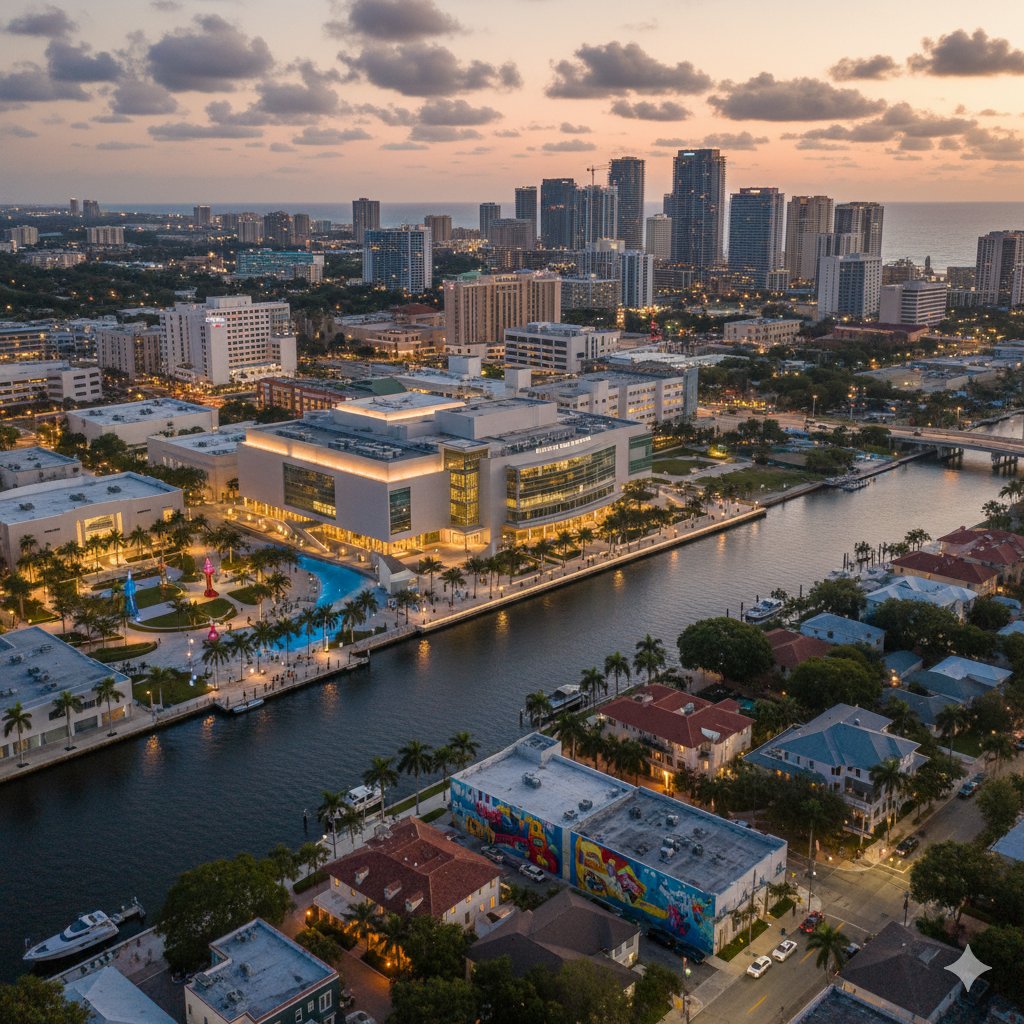
Fort Lauderdale’s Arts & Cultural Scene for Luxury Living
Fort Lauderdale’s arts and cultural scene has quietly become one of South Florida’s most underrated luxury signals—and the people who consistently win in real estate (buyers and sellers) are noticing. This city used to be easy to summarize: boats, beaches, and weekends. Now? It’s a place where culture, creativity, and high-end lifestyle intersect in a way that feels usable—meaning you don’t need to plan a whole expedition to enjoy it. For affluent buyers (CEOs, founders, hedge fund and finance professionals, and waterfront home shoppers), that usability matters because it’s what turns “nice on paper” into “I actually want to live here.”
Here’s the real point: culture isn’t décor. It’s a demand engine. In Broward County, nonprofit arts and culture generated $386.6 million in economic activity in 2022 and supported 6,718 jobs—with spending split between organizations and audiences, plus measurable tax revenue impact.[1] That’s not just community flavor; that’s infrastructure. And in luxury real estate, infrastructure is what protects value when the market gets moody.
This guide breaks down Fort Lauderdale’s arts and cultural scene like a lifestyle strategist would: the anchor institutions, the arts districts, the walkable corridors, the event rhythm, and the real estate implications—especially for affluent buyers and sellers who treat lifestyle as a non-negotiable. You’ll also get practical positioning for listings and smart neighborhood frameworks that most competing articles never touch.
Table of Contents
-
Why Arts & Culture Matter When Choosing Where to Live
-
Fort Lauderdale’s Cultural Evolution: From Beach Town to Cultural Capital
-
Anchor Institutions Powering Fort Lauderdale’s Cultural Scene
-
Arts Districts That Shape the City’s Creative Energy
-
Las Olas Boulevard: The Cultural Identity Corridor
-
Performing Arts, Music & Live Entertainment
-
Festivals, Art Walks & Signature Cultural Events
-
Cultural Living for Families & Young Professionals
-
Waterfront Living Meets the Arts
-
How Arts & Culture Impact Fort Lauderdale Real Estate Values
-
Cultural Neighborhood Breakdown for Buyers
-
How Sellers Should Use Culture to Win
-
Fort Lauderdale vs. Competing Luxury Markets
-
Who Thrives Most in Fort Lauderdale’s Cultural Scene
-
Quick Takeaways
-
FAQs
-
Conclusion + Call to Action
-
Join the Conversation
-
References
Why Arts & Culture Matter When Choosing Where to Live
If you’re an affluent buyer, you already know the obvious stuff—water views, walkability, privacy, security, good schools, and a social scene that doesn’t feel forced. What people underestimate is how much arts and culture in Fort Lauderdale acts like a multiplier across all of that. It’s not just “things to do.” It’s a signal that the city has depth, consistency, and a quality-of-life rhythm that fits high-performing lives.
Here’s the real reason it matters: culture creates repeatable lifestyle behavior. A city can have amazing beaches and still feel empty when the novelty wears off. But when Fort Lauderdale’s arts and cultural scene is active—museums, theater nights, art walks, district events—you get a calendar that keeps residents engaged year-round. That’s the difference between a place people visit and a place people commit to.
And yes, there’s a business case behind it. Broward County’s Arts & Economic Prosperity 6 report (customized for the county) found that nonprofit arts and culture generated $386.6 million in economic activity during 2022 and supported 6,718 jobs, along with meaningful tax revenues.[1] When an ecosystem supports jobs and stable spending patterns, it tends to support housing demand—especially in premium neighborhoods where residents are buying lifestyle.
Unique insight (luxury lens): culture is a “luxury amenity” that lives outside the property line. Think of it like a private club you don’t have to join. It’s there when you want it: weekday museum afternoons, Friday night performances, Saturday art walk, Sunday brunch near the river. That predictability is what busy executives crave—less planning, more living.
That’s why long-tail searches like walkable cultural districts Fort Lauderdale and Fort Lauderdale cultural attractions matter so much: they reveal that buyers aren’t shopping for entertainment; they’re shopping for ease. If you’re buying, this should influence your neighborhood selection. If you’re selling, it should absolutely influence your story.
Fort Lauderdale’s Cultural Evolution: From Beach Town to Cultural Capital
Fort Lauderdale has always had natural assets—waterways, beaches, and a lifestyle that sells itself. What changed is that the city has matured into a place with legitimate cultural infrastructure. That shift is why Fort Lauderdale’s arts and cultural scene now feels more like a “real city” experience versus a seasonal resort mood.
A helpful way to understand this evolution is by looking at how cultural institutions and districts present themselves: Riverwalk Fort Lauderdale explicitly describes the downtown district and Riverwalk Linear Park as including 10 parks and a “lush tropical waterfront” at the center of an urban core.[3] That kind of language matters because it signals a city investing in public space, events, and identity—not just relying on beaches.
And the momentum isn’t isolated to one or two venues. The national Arts & Economic Prosperity 6 (AEP6) study highlights the broader macro picture: nonprofit arts and culture organizations spent an estimated $73.3 billion in the U.S., supporting 1.6 million jobs and generating $18.3 billion in government revenue.[5] Broward’s local results sit inside that national context, which is part of why culture tends to correlate with “sticky” prosperity.
Unique insight: culture creates a “second demand layer” that’s less rate-sensitive. When people choose a place because their lifestyle works there—schools, wellness, restaurants, arts, social networks—they don’t vanish when the market gets choppy. They may negotiate harder, but they still want the same outcome: a city that fits. Fort Lauderdale’s cultural growth helps it compete with Miami’s intensity while keeping day-to-day livability intact.
If you’re a buyer, this evolution is your edge because you’re not just buying into the past reputation; you’re buying into the trajectory. If you’re a seller, it’s leverage: you’re not selling “Fort Lauderdale (beach)”—you’re selling Fort Lauderdale (complete lifestyle).
Anchor Institutions Powering Fort Lauderdale’s Cultural Scene
Every city claims culture. The cities that actually feel cultural have anchor institutions—places that create consistent programming, attract donors, educate residents, and keep the calendar alive even when tourism cycles shift. Fort Lauderdale has multiple anchors that elevate Fort Lauderdale’s arts and cultural scene from “cute” to credible.
Broward Center for the Performing Arts + The Parker
Performing arts is a major credibility marker for high-net-worth buyers. It signals taste, civic investment, and a social ecosystem where evenings have structure. One strong indicator of long-term commitment: the Broward Center described The Parker (formerly Parker Playhouse) as set to undergo a $25 million transformation to modernize the venue, framing it as iconic and historically important to the city’s cultural identity.[4]
Unique insight: large performing arts venues create what I call “high-intent nights.” These aren’t random bar-hops. They’re planned evenings: dinner, valet, show, dessert, a nightcap. High-intent nights reinforce premium dining and hospitality nearby, which is part of how cultural corridors build pricing power over time.
Arts & Museum Anchors (Lifestyle Credibility)
Museums and heritage destinations matter for luxury because they add intellectual and social depth. They also give families and professionals options when the weather flips or the week is hectic. A strong museum ecosystem supports the long-tail intent “Fort Lauderdale art museums and galleries” because people want repeatable experiences, not one-time tourism stops.
Unique insight: anchors also create “social infrastructure.” Board seats, donor circles, charity galas, and seasonal events become part of how affluent residents network—and how they choose “their people.” That is a quiet but powerful driver in luxury relocation.
Infographic Concept: “Culture → Lifestyle → Demand → Value” flow chart (replace with a custom-designed diagram).
Arts Districts That Shape the City’s Creative Energy
Institutions are the pillars. Arts districts are the pulse. They’re what turn Fort Lauderdale’s arts and cultural scene from “special occasion” into “Tuesday night option.” For affluent buyers, the best districts are the ones you can actually use without friction: walkable, safe, and integrated with dining and everyday life.
Riverwalk Fort Lauderdale: The Downtown Cultural Spine
Riverwalk Fort Lauderdale describes its downtown ecosystem as the Riverwalk Linear Park and Downtown Riverwalk District, including 10 parks and a lush waterfront at the center of the city.[3] That’s important because parks + water + venues create a loop: you can take visitors out, you can build weekend habits, and you can live an “urban-luxury” lifestyle without giving up green space.
Unique insight: Riverwalk-style environments create “low-effort luxury.” You’re not driving 30 minutes to access the city; you’re stepping into it. That’s a big reason walkability commands premiums in top-tier markets.
FATVillage ArtWalk: Rhythm That Builds Community
FATVillage’s ArtWalk is explicitly positioned as Fort Lauderdale’s original art walk, held on the last Saturday of every month (except December) with gallery hours and a predictable timeframe.[2] Riverwalk’s event listing also describes the ArtWalk as a monthly celebration that has grown into a festival of up to several thousand people.[6] That kind of recurring rhythm matters because it turns culture into a habit, not a novelty.
Unique insight: art walks are “neighborhood legitimacy machines.” They build perception: energy, safety, social life, local pride. For buyers, that means lifestyle confidence. For sellers, it’s a positioning weapon.
MASS District (Music & Arts South of Sunrise): Modern Creative Energy
Creative districts like MASS appeal to founders, designers, and modern luxury buyers who care about originality. These buyers often pay premiums for neighborhoods that feel current—not just expensive. If you’re aiming for “culture-driven living in Fort Lauderdale,” districts like this matter because they attract the kind of residents who support new restaurants, galleries, boutique fitness, and design-forward retail.
Unique insight: creative districts are often early indicators of appreciation, but not always in a straight line. The winners tend to have recurring events, consistent branding, and a “third place” culture (cafés, studios, co-working, community programs). That’s what turns a vibe into value.
Las Olas Boulevard: The Cultural Identity Corridor
Las Olas isn’t just a street—it’s a brand. It’s the corridor that makes Fort Lauderdale feel polished and social without feeling chaotic. When affluent buyers ask about Las Olas arts and culture, they’re usually asking a deeper question: “Can I live somewhere that feels upscale on a random weeknight?”
The power of Las Olas is that it compresses your options. Dining, galleries, museums, shopping, and nightlife exist within a walkable, high-energy environment. For CEOs and business owners, this is huge: you can meet clients, entertain friends, or plan a date night without overthinking it.
Unique insight: “near Las Olas” is a status shortcut for relocations. Out-of-town buyers often don’t know the city neighborhood-by-neighborhood on day one. But they do recognize identity anchors. Las Olas reduces perceived risk and increases confidence—two emotions that drive luxury decisions.
If you’re selling within the Las Olas orbit, your marketing should lean hard into the lifestyle: walkability, culture, and routine, not just finishes and square footage.
Performing Arts, Music & Live Entertainment
Performing arts is one of the fastest ways a city earns “grown-up” credibility. It signals investment, education, philanthropy, and a lifestyle where nights out can be elevated and intentional. Fort Lauderdale’s performing arts scene is anchored by venues committed to modernization and long-term relevance.
The Parker’s planned $25 million transformation is a strong case study. The Broward Center framed it as bringing an iconic venue into the 21st century and emphasized its historical role in shaping the city’s cultural community.[4] That’s what cultural investment looks like when a city is serious: not one-off events, but long-range upgrades that signal “we’re building for the next decade.”
Unique insight: performing arts creates “predictable prestige.” You don’t have to chase the social scene. You just show up to what’s scheduled—and you’re surrounded by residents who value similar things. That’s a subtle but meaningful luxury driver, especially for finance professionals and executives who want social life with structure.
Long-tail terms like performing arts in Fort Lauderdale matter because the intent is lifestyle: people aren’t searching for a one-time show; they’re searching for a city with a calendar.
Festivals, Art Walks & Signature Cultural Events
Events are where culture stops being a concept and becomes a routine. And routine is what affluent buyers pay for—because it means they’ll actually use what the city offers. Fort Lauderdale’s event ecosystem shines most in recurring programs that consistently draw residents out.
FATVillage ArtWalk is a standout example because it’s predictable: the official event page promotes it as a recurring art walk on the last Saturday of every month (except December) with set times and gallery close details.[2] Riverwalk’s listing further describes it as a monthly festival experience that can reach thousands of attendees.[6]
Unique insight: recurring events create “neighborhood confidence.” People start bringing visitors, posting about it, and recommending the area. That builds reputation. And in real estate, reputation becomes demand—especially in markets where affluent buyers want to feel proud of their location, not just their home.
If you’re marketing a home, don’t mention events as random trivia. Tie them to a lifestyle loop: “ArtWalk Saturday → dinner nearby → Sunday Riverwalk stroll.” That’s how you sell Fort Lauderdale’s arts and cultural scene as a lived experience.
Cultural Living for Families & Young Professionals
Culture is not just “art people stuff.” For families and high-performing professionals, culture is a quality-of-life tool. It creates options that make your week richer without a massive planning burden. That’s why family-friendly cultural activities Fort Lauderdale is a meaningful long-tail search: parents want easy enrichment.
For young professionals and executives, cultural districts do something else: they speed up belonging. When you relocate, the hardest part isn’t finding a home—it’s finding your rhythm. Museums, theaters, art walks, and district events create entry points into the community. You meet people who care about similar things. You find your spots. You build your “third places.”
Unique insight: culture reduces burnout. For top earners, “luxury” increasingly means reduced friction and more meaningful downtime. A city with strong cultural programming gives you ready-made weekends: show night, museum afternoon, art walk, riverfront stroll. That’s not fluff—it’s how high performers protect their energy.
If you’re buying, prioritize proximity to cultural nodes you’ll actually use. If you’re selling, highlight how culture supports daily life for families and professionals—without overselling. Affluent buyers can smell hype. They want the practical version.
Waterfront Living Meets the Arts
Fort Lauderdale’s superpower is that it’s a waterfront city with cultural depth close by. In many markets, waterfront living means you’re trading access to city experiences for views. Here, you can keep both—especially when you’re near downtown, Riverwalk, and the Las Olas corridor.
Riverwalk’s description of a lush waterfront district with 10 parks at the center of downtown underlines how integrated the water and city lifestyle are.[3] That integration is what makes Fort Lauderdale waterfront lifestyle and culture a legitimate differentiator versus competing cities.
Unique insight: culture is “weather insurance” for waterfront buyers. Florida weather is amazing—until it isn’t. When it rains, your lifestyle shouldn’t collapse. Museums, theater nights, gallery circuits, and district events ensure your weekend still has depth. This matters a lot for second-home buyers with limited time: they don’t want a trip that’s only fun when the sun is perfect.
If you’re selling a waterfront property, don’t market it as “waterfront only.” Market it as “waterfront + cultural access,” because that combination widens your buyer pool and justifies premium positioning.
How Arts & Culture Impact Fort Lauderdale Real Estate Values
Let’s be blunt: most culture articles skip the real question—does this affect value? It does, especially at the luxury level where buyer decisions are lifestyle-first. Culture creates stability by attracting residents who spend locally, stay longer, and build community identity.
The Broward AEP6 report is your strongest data-backed reference point: nonprofit arts and culture generated $386.6 million in economic activity in 2022 and supported 6,718 jobs, plus tax revenues that benefit government services and public investment.[1] This doesn’t mean “art automatically raises home prices,” but it does mean culture contributes to the economic engine that supports demand.
The national AEP6 dashboard underscores how large the sector is overall: an estimated $73.3 billion in spending, supporting 1.6 million jobs and generating $18.3 billion in government revenue in the U.S.[5] When a city’s culture ecosystem is healthy, it tends to correlate with strong urban amenities, engaged civic leadership, and “sticky” lifestyle value.
Unique insight: culture is an anti-commodity factor. In luxury real estate, properties start to feel interchangeable: another modern kitchen, another water view, another renovated bathroom. Culture differentiates. A buyer comparing two similar condos may choose the one near an arts district because it makes life feel bigger. That emotional edge can translate into stronger negotiation posture and faster decisions.
For sellers, the implication is simple: don’t market your home as a product—market it as access to culture-driven living in Fort Lauderdale. The right buyer will pay more for a lifestyle that fits.
Cultural Neighborhood Breakdown for Buyers
Buyers often ask, “What’s the best area if I want culture?” The better question is: “Do I want culture access or culture identity?” That framework helps affluent buyers make decisions that match how they actually live.
Culture-Access Neighborhoods (You’ll Use It Weekly)
-
Downtown Fort Lauderdale: Riverwalk proximity, district events, urban lifestyle loops.[3]
-
Las Olas orbit: social corridor energy, dining, galleries, quick access to venues.
These are ideal if you want “walk out and do something” living. They also align well with the long-tail search Downtown Fort Lauderdale cultural scene.
Culture-Identity Neighborhoods (You’ll Use It Monthly, But You Want the Brand)
-
Adjacent waterfront/residential enclaves that connect easily to the core
-
Areas near arts districts where culture is close enough to feel like part of your identity
Unique insight: premiums are strongest when culture is usable. If you genuinely use art walks, shows, and museums, you’ll feel the value every week. If you want culture as identity, you’ll still benefit—especially for resale—but your decision should focus more on privacy, water access, and neighborhood fit.
How Sellers Should Use Culture to Win
The harsh truth: most listings sound identical. “Quartz countertops, open concept, impact windows.” Great. Your competition is saying the same thing. Culture is one of the easiest ways to differentiate without exaggerating.
Here’s the move: sell the calendar, not just the features. Use recurring, credible lifestyle anchors: FATVillage ArtWalk on the last Saturday of every month (except December), with predictable hours and galleries open.[2] Riverwalk’s district identity and parks-based waterfront experience.[3] Major venue modernization like The Parker’s $25M transformation as proof of long-term investment.[4]
Unique insight: culture gives you buyer segmentation leverage. You can frame the same facts differently:
-
CEOs/business owners: hosting and client entertainment (“high-intent nights”).
-
Finance pros: curated weekends and community identity.
-
Families: enrichment and weekend structure.
-
Waterfront buyers: year-round depth beyond weather.
That’s how you make Fort Lauderdale’s arts and cultural scene a selling advantage without sounding salesy. You’re not claiming “this will raise your home value.” You’re saying “this is the lifestyle buyers are paying for.”
Fort Lauderdale vs. Competing Luxury Markets
Wealthy buyers have options. So comparisons are part of the decision. Fort Lauderdale competes by offering “luxury with usability.”
Fort Lauderdale vs. Miami
Miami has scale and intensity. Fort Lauderdale has balance. Many affluent buyers choose Fort Lauderdale because they want culture without the daily friction. They want a scene they can access frequently without it turning into a traffic-and-parking project. That’s why walkable cultural districts Fort Lauderdale is such a powerful intent phrase: it reflects a preference for practicality.
Fort Lauderdale vs. Palm Beach
Palm Beach leans traditional and legacy-coded. Fort Lauderdale feels more modern and entrepreneurial—often a better fit for founders, executives, and younger affluent households who want both polish and energy.
Unique insight: Fort Lauderdale wins on “balance density.” Dense enough to feel culturally alive, not so dense that it overwhelms. In luxury living, that balance is rare—and valuable.
Who Thrives Most in Fort Lauderdale’s Cultural Scene
Not everyone uses culture the same way. The best buyers are the ones whose lifestyle “clicks” with the city. Here’s who Fort Lauderdale tends to serve extremely well—especially when Fort Lauderdale’s arts and cultural scene is part of the decision.
CEOs & Business Owners
Culture becomes part of hosting capital—client dinners, performance nights, gallery events, donor circles. It signals that you live in a place that reflects your taste without needing constant hype.
Hedge Fund & Finance Professionals
Many finance professionals optimize for “off-hours structure.” Culture gives predictable, elevated weekends: art walk, show night, riverfront loop. You don’t chase fun; you plug into it.
Young Families
Families want enrichment that doesn’t feel like a chore. Museums, festivals, and walkable waterfront districts create low-friction weekends. That’s a major driver behind family-friendly cultural activities Fort Lauderdale.
Waterfront & Second-Home Buyers
Waterfront is the hook. Culture is the depth. The best second-home markets keep you engaged beyond weather—and Fort Lauderdale does that well.
Unique insight: culture is a retention engine. People don’t stay in a city because the home is nice. They stay because the lifestyle has depth—and depth stabilizes demand.
Quick Takeaways
-
Arts and culture are a demand driver, not a soft perk—especially in luxury real estate.
-
Fort Lauderdale has evolved from beach town to a more culture-forward, livable luxury city.
-
Riverwalk’s 10-park district supports walkable lifestyle density in the downtown core.[3]
-
FATVillage ArtWalk adds consistent monthly cultural rhythm (last Saturday, except December).[2]
-
The Parker’s $25M transformation signals long-term performing arts investment and civic commitment.[4]
-
Sellers should market routine and lifestyle (calendar-based storytelling), not just home features.
-
Waterfront + culture is a rare pairing that supports year-round lifestyle depth.
Frequently Asked Questions
Is Fort Lauderdale known for arts and culture, or is it mostly a beach city?
It’s increasingly known for both. Fort Lauderdale’s arts and cultural scene includes walkable districts, recurring art events, and long-term investment in performing arts and public spaces, while still offering the waterfront lifestyle people move here for.
How does Fort Lauderdale’s arts and cultural scene affect real estate values?
Culture supports lifestyle density and stable demand—especially among affluent, lifestyle-first buyers. Broward’s nonprofit arts and culture sector generated $386.6M in economic activity and supported 6,718 jobs in 2022, which reflects a meaningful local economic engine.[1]
Which areas are best for arts-focused neighborhoods in Fort Lauderdale?
Buyers who want frequent cultural access tend to prioritize Downtown/Riverwalk proximity and the Las Olas orbit, where walkable cultural districts Fort Lauderdale are most practical and repeatable.
Is Fort Lauderdale’s cultural scene family-friendly?
Yes—monthly art walks, waterfront park districts, and educational cultural programs create strong options for families. That’s why searches like family-friendly cultural activities Fort Lauderdale continue to grow.
How does Fort Lauderdale compare to Miami for culture and lifestyle?
Miami offers bigger scale and intensity. Fort Lauderdale offers balance: culture you can access frequently without constant congestion. Many affluent buyers prefer that “usable sophistication.”
Conclusion + Call to Action
Fort Lauderdale’s arts and cultural scene is no longer background noise to beaches and boats—it’s a real lifestyle and demand driver. The city’s cultural ecosystem is supported by meaningful economic activity and jobs, anchored public spaces like Riverwalk’s downtown district, and recurring events that create routine and neighborhood identity.[1][3]
For buyers, the win is choosing neighborhoods where culture is usable—walkable districts, consistent programming, and easy access to performances and events that keep your calendar alive year-round. For sellers, the win is leverage: culture helps you position a property as a lifestyle asset, not a commodity listing. In a crowded market of similar homes, Fort Lauderdale’s arts and cultural scene becomes a differentiator that attracts high-intent buyers.
Call to Action: If you’re considering buying or selling in Fort Lauderdale and want a neighborhood strategy that aligns with a culture-driven luxury lifestyle—plus positioning that speaks directly to CEOs, business owners, finance professionals, families, and waterfront buyers— connect with Madriz Collective. We don’t just sell homes. We help you buy and sell the lifestyle behind them.
Join the Conversation
If this guide helped you see Fort Lauderdale’s arts and cultural scene differently, share it with someone who’s thinking about buying, selling, or relocating to South Florida.
Question: What matters most to you—walkable arts districts, performing arts, museums, or waterfront living with culture nearby?
References
-
Broward County Cultural Division / Americans for the Arts. Arts & Economic Prosperity 6: Broward County Customized Final Report (2022). https://www.broward.org/Arts/Documents/FL_BrowardCounty_AEP6_CustomizedFinalReport.pdf
-
FATVillage. FATVillage ArtWalk (Last Saturday of Every Month, Except December). https://www.fatvillage.com/events/fatvartwalkapril21-yhylr-kbjyp-zl8gt-paj3p-h22p9
-
Riverwalk Fort Lauderdale. Riverwalk Linear Park and Downtown Riverwalk District (Including 10 Parks). https://www.goriverwalk.com/
-
Broward Center for the Performing Arts. Curtain to Rise on Act II at Parker Playhouse: $25 Million Transformation Planned. https://www.browardcenter.org/about/press-room/news/detail/curtain-to-rise-on-act-ii-at-parker-playhouse-25-million-transformation-planned-for-iconic-entertainment-venue
-
Americans for the Arts. Arts & Economic Prosperity 6 (AEP6) National Dashboard. https://aep6.americansforthearts.org/
-
Riverwalk Fort Lauderdale Events. FATVillage ArtWalk Listing and Growth Description. https://www.goriverwalk.com/greater-fort-lauderdale-events/fatvillage-artwalk
