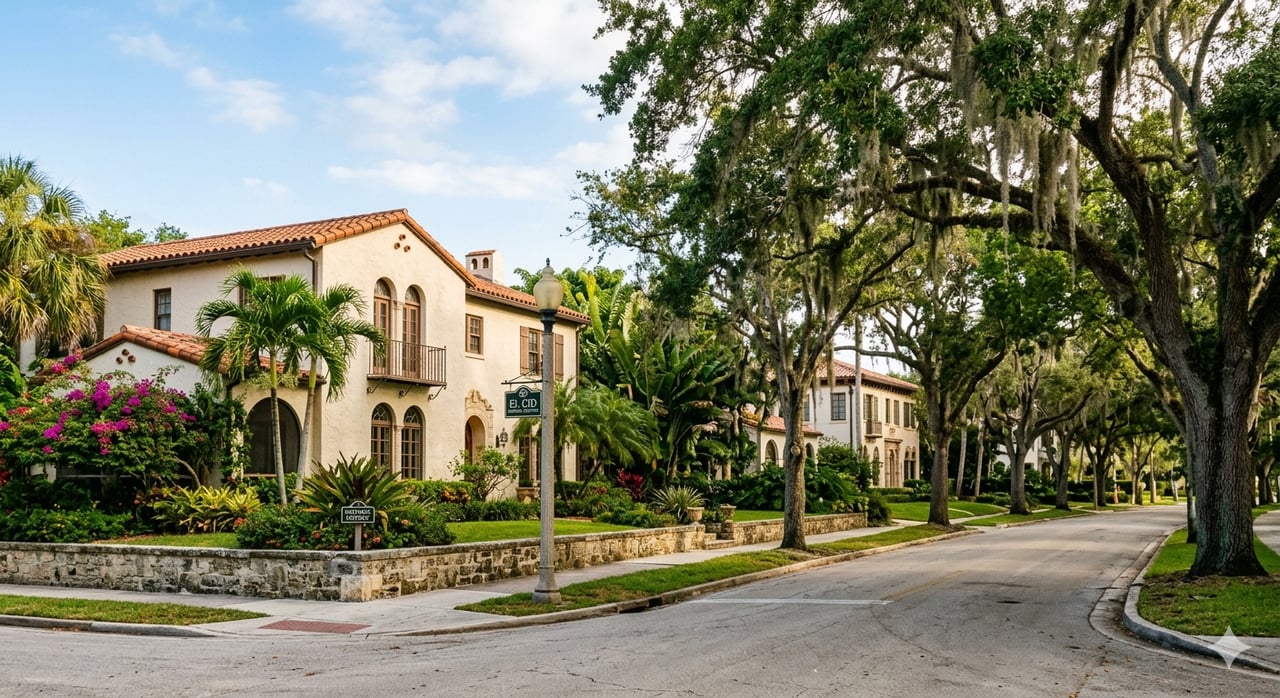
Historic Neighborhoods in West Palm Beach: Luxury & Value
Introduction
In a market filled with new construction and cookie-cutter developments, historic neighborhoods in West Palm Beach offer something different—something that can’t be replicated. Tree-lined streets, architectural detail from another era, and a sense of identity that modern builds often lack.
For affluent buyers, this isn’t just about aesthetics—it’s about owning something scarce, meaningful, and positioned for long-term value. From waterfront estates in El Cid to the walkable charm of Flamingo Park and the upside of Old Northwood, these neighborhoods combine architecture, lifestyle, and investment potential in a way few markets can.
Why Historic Neighborhoods in West Palm Beach Are in High Demand
This demand is driven by scarcity, identity, and long-term value.
- Limited inventory due to preservation rules
- Unique architecture not found in new builds
- Stronger price stability over time
Key Insight: Historic homes function as emotional assets. Buyers hold them longer, reducing turnover and increasing value stability.
Understanding West Palm Beach’s Historic District Designation
West Palm Beach’s historic districts largely emerged during the 1920s Florida land boom (source).
What This Means for Buyers
Preservation Rules
Exterior changes often require approval, protecting neighborhood character and value.
Architectural Consistency
Mediterranean Revival, Spanish Colonial, and Craftsman styles define these areas.
Value Protection
Restricted development prevents oversupply and maintains long-term demand.
The Top Historic Neighborhoods in West Palm Beach
El Cid – Waterfront Prestige
One of the most prestigious areas, featuring Mediterranean estates and Intracoastal proximity (source).
Flamingo Park – Walkability + Culture
A vibrant neighborhood with over 400 historic structures (source).
Grandview Heights – Urban + Historic
Combines historic homes with proximity to downtown and cultural hubs.
Old Northwood – Investment Opportunity
Emerging area with strong upside potential for investors.
SoSo (South End) – Waterfront Living
Combines livability with proximity to the Intracoastal.
Architectural Styles That Define Value
- Mediterranean Revival
- Spanish Colonial
- Craftsman
Insight: Architecture directly influences pricing by creating emotional connection and differentiation.
Investment Potential of Historic Homes in West Palm Beach
- Scarcity = Price Stability
- Strong appreciation trends
- Renovation upside opportunities
Bottom Line: Historic homes combine limited supply + high demand, making them strong long-term investments.
Buyer Profiles
- CEOs & business owners
- Relocation buyers
- Young affluent families
These buyers prioritize lifestyle, identity, and long-term value.
What to Know Before Buying
- Renovation restrictions
- Maintenance costs
- Insurance considerations
Tip: Strategy matters more than emotion when buying historic properties.
Historic vs New Construction
Historic Homes: Scarcity, uniqueness, long-term value
New Construction: Supply-driven, standardized, more competition
Conclusion: Historic homes compete on identity; new construction competes on availability.
Quick Takeaways
- Historic neighborhoods offer scarcity-driven value
- Architecture impacts pricing
- El Cid = luxury, Old Northwood = upside
- Historic homes outperform in identity and demand
- Renovation creates equity opportunities
FAQs
What are the best historic neighborhoods in West Palm Beach?
El Cid, Flamingo Park, Old Northwood, and SoSo are among the top options.
Are historic homes a good investment?
Yes—limited supply and strong demand support long-term appreciation.
What should I know before buying?
Expect renovation restrictions, maintenance costs, and approval processes.
Conclusion
Historic neighborhoods in West Palm Beach combine scarcity, architecture, and long-term value. These properties are not just homes—they are strategic assets positioned for sustained demand.
Next Steps
Message Madriz Collective for:
- Private tours
- Off-market opportunities
- Strategic guidance
Engagement
Which historic neighborhood stands out to you the most—and why?
