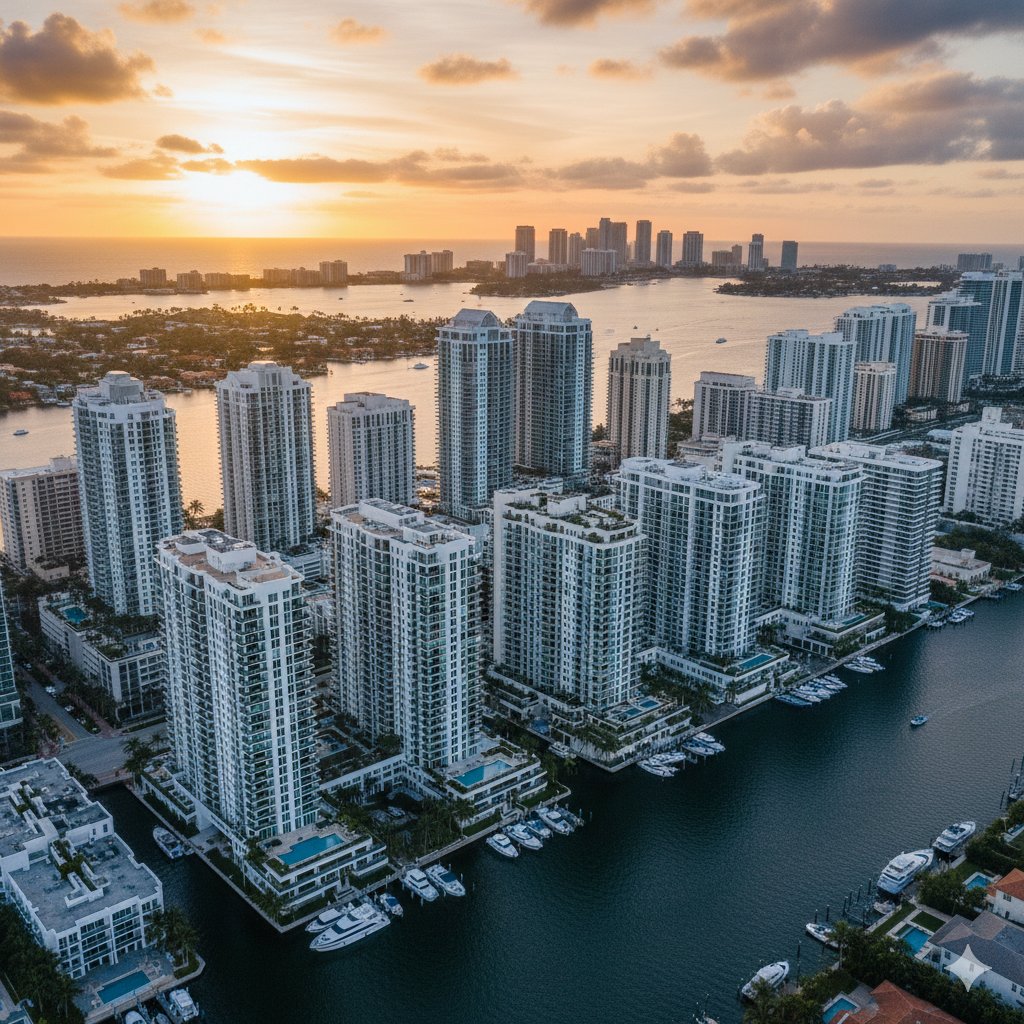
Investment Opportunities in Fort Lauderdale’s Luxury Market
A strategic, data-driven guide for high-net-worth investors, CEOs, hedge fund managers, successful business owners, and waterfront luxury buyers.
Introduction
Fort Lauderdale has quietly evolved from a lifestyle-driven coastal city into one of the most strategic luxury real estate investment markets in the United States. For high-net-worth investors who care about capital preservation, downside protection, and long-term upside, this market now sits in a rare spot: strong demand, limited true waterfront supply, and pricing that still often feels “value-adjusted” compared to flashier peers.
Investment opportunities in Fort Lauderdale’s luxury market aren’t just about acquiring a beautiful home. They’re about understanding the mechanics that actually drive value at the top end: land scarcity, direct ocean-access logistics, replacement cost, buyer pool depth, and the realities of carrying costs (insurance, taxes, maintenance, and HOA reserves). If you’ve ever watched two “similar” waterfront properties trade at wildly different numbers, this guide will help you understand why.
In this article, you’ll get a clear investor-first framework: how the Fort Lauderdale luxury market is structured, what macro trends matter (and what’s just noise), which neighborhoods align with which strategies, how sophisticated buyers underwrite luxury deals, how to manage risk in a post-2023 insurance/condo environment, and how to plan exits without gambling on perfect timing. The goal is simple: help you deploy capital intelligently and confidently—without falling for hype.
Quick Takeaways
- Fort Lauderdale is a compounding luxury market: controlled evolution beats hype-driven spikes for capital preservation.
- Waterfront land drives long-term value more than finishes, branding, or “Instagram upgrades.”
- Inventory changes create leverage, not necessarily distress—ideal conditions for disciplined buyers.
- Luxury tiers behave differently: liquidity, negotiation power, and buyer pool depth shift meaningfully above $5M and again above $10M.
- Condos vs. single-family are different instruments: condos can be lifestyle/capital parking, while waterfront single-family often wins on appreciation and control.
- Underwrite carrying costs like a CFO: insurance, taxes, maintenance, and HOA reserves can make or break true returns.
- Best investors buy optionality: assets that can be held, rented, or sold without forcing a single outcome.
Custom Visual Concepts
Infographic Concept 1: “Fort Lauderdale Luxury Market: Investment Strategy Map”
What it shows: a quadrant-style “map” (not a literal map) matching neighborhoods to investment theses: trophy waterfront/capital preservation, ultra-luxury privacy/long-hold, replacement-cost arbitrage/value-add, and walkability/liquidity plays.
Use it in the article: place near the “Neighborhood-by-Strategy Breakdown” section.
Alt text (SEO-optimized): Investment opportunities in Fort Lauderdale’s luxury market explained by neighborhood-based strategies including waterfront capital preservation, appreciation, value-add, and liquidity-focused plays.
Diagram Concept 2: “Luxury Underwriting Stack: What Actually Drives Returns”
What it shows: a layered stack with the true drivers (bottom to top): land scarcity & ocean access, replacement cost vs price, annual carrying burn, liquidity/buyer pool depth, exit timing & cycle alignment.
Use it in the article: place at the start of “Financial Modeling & Underwriting Luxury Deals.”
Alt text (SEO-optimized): Luxury underwriting framework for investment opportunities in Fort Lauderdale’s luxury market using land value, replacement cost, carrying costs, buyer pool depth, and exit strategy.
Infographic Concept 3: “Fort Lauderdale vs Miami: Luxury Investment Value Comparison”
What it shows: a side-by-side scorecard comparing price-per-square-foot dynamics, waterfront inventory scarcity, buyer competition intensity, volatility, and long-term hold appeal.
Use it in the article: place after the “Why Fort Lauderdale…” section to anchor positioning.
Alt text (SEO-optimized): Comparison of investment opportunities in Fort Lauderdale’s luxury market versus Miami, highlighting price-per-square-foot value, waterfront supply, negotiation leverage, and long-term investment appeal.
Why Fort Lauderdale Has Become a Prime Luxury Investment Market
Fort Lauderdale didn’t “pop” overnight—it matured into an investable luxury market. The biggest tell is the buyer profile. This is increasingly a market for executives, business owners, and high-net-worth households who want lifestyle and financial logic in the same decision. That matters because end-user driven luxury demand tends to be stickier than purely speculative demand.
If you’re comparing Fort Lauderdale luxury real estate investment opportunities to Miami, think of Fort Lauderdale as the “value-adjusted” play. You get comparable coastal lifestyle perks—yachting culture, beaches, dining, private aviation accessibility, and year-round demand—often with less headline volatility. Miami’s global branding can command a premium (sometimes deserved, sometimes frothy). Fort Lauderdale’s premium is typically more tied to fundamentals: water access, land scarcity, and livability.
Another factor: the market’s narrative is shifting from “vacation town” to “wealth hub.” You can see the broader luxury conversation moving toward risk mitigation, resilience, and buyer caution—even while luxury remains comparatively strong. Architectural Digest’s 2026 luxury real estate trend coverage highlights how luxury buyers increasingly prioritize safety and risk management over pure aesthetic ambition, which fits Fort Lauderdale’s direction (stronger building standards, storm-hardening, and more analytical buyer behavior). Source.
For investors, the “why now” is not hype—it’s a market that’s sorting itself. Increased inventory in some segments can create negotiation leverage without forcing a crash, which is exactly the kind of environment disciplined capital likes. The opportunity is finding assets where the long-term thesis is intact and the short-term friction (pricing, timing, seller motivation, carrying costs) gives you entry advantage.
Unique insight: Fort Lauderdale’s best argument isn’t growth—it’s controlled evolution. Markets that spike fast often correct hard. Markets that compound steadily tend to protect capital better, especially when your goal is wealth preservation with upside.
Understanding Fort Lauderdale’s Luxury Market Structure
Luxury in Fort Lauderdale isn’t one market—it’s a set of micro-markets layered by price tier, asset type, and neighborhood psychology. That’s why two listings can look similar online yet trade very differently in real life. The best investors separate “luxury housing” into distinct buckets and underwrite each one differently.
At a high level, think in tiers: roughly $2M–$5M (upper luxury), $5M–$10M (true luxury), and $10M+ (ultra-luxury/trophy). As you move up, the buyer pool narrows and the influence of micro-factors increases: canal depth, no-fixed-bridge access, lot orientation, seawall condition, dock eligibility, privacy, and architectural pedigree. In other words, comps alone become less useful the higher you go.
Asset type matters. Luxury condos can function as capital parking and lifestyle convenience, but they carry shared-risk variables (HOA reserves, assessment exposure, insurance costs, governance quality). Single-family waterfront homes often win on control and land scarcity, which is why they’re the backbone of most long-term appreciation theses.
Investor behavior also differs by segment. In the $2M–$3M band, liquidity tends to be better because there are more qualified buyers. Above $5M, you need more patience and better positioning. Above $10M, you’re effectively selling a story, not just a house. That’s where “time on market” and negotiation swings can get dramatic.
Unique insight: In Fort Lauderdale, land appreciates faster than structures. The market will pay up for location and water access even when it’s indifferent to certain interior upgrades. That’s why the smartest underwriting starts with the dirt and the water, not the countertops.
Macro Market Trends Impacting Luxury Investments
Macro headlines are noisy for luxury buyers because they often focus on median prices and entry-level dynamics. The luxury segment behaves differently—especially in markets with genuine waterfront scarcity. Your job as an investor is to separate “headline market” from “asset-specific reality.”
One useful reality check is to look at broader investment signals that point to South Florida’s continuing strength as a capital magnet. Forbes reported in October 2025 that South Florida’s waterfront real estate boom continues despite climate concerns, noting large-scale development and economic activity tied to the sector. Source. Whether you agree with the framing or not, the takeaway is straightforward: wealthy buyers are still transacting, and the market is responding with continued investment.
Another macro angle: multifamily investment conditions in the Fort Lauderdale area have been strong relative to other metros. Miami REALTORS reported in October 2025 that Fort Lauderdale led 30 markets in multifamily investment profitability with a cap rate of 6.3% (Yardi Matrix), and cited vacancy context compared to national levels. Source. Even if your focus is trophy single-family or luxury condos, this matters because it signals institutional attention and regional economic durability.
For residential luxury specifically, The Institute for Luxury Home Marketing’s monthly Luxury Market Report is a credible benchmark source for luxury market trends and provides standardized luxury metrics across North America. Source (PDF).
Unique insight: In “normalizing” cycles, the best opportunities show up when the market is still functioning but sentiment is messy. That’s where you can negotiate terms without needing a distressed seller—and without betting your plan on a forced liquidation that may never come.
Core Luxury Investment Strategies in Fort Lauderdale
When sophisticated investors evaluate luxury real estate investment strategies in Fort Lauderdale, they usually fall into a few repeatable plays. The key is to match strategy to asset type, neighborhood, and personal objectives (capital preservation vs upside vs lifestyle).
1) Long-Term Hold for Capital Preservation
This is the “sleep well” strategy: buy a high-quality location where land scarcity and end-user demand create a durable floor. In Fort Lauderdale, this often means waterfront or near-water neighborhoods with proven prestige and limited future supply. The return profile may be less flashy month-to-month, but historically this is how wealthy families preserve capital through cycles—especially when the asset can also serve as a lifestyle base.
Investor mindset: you’re not chasing yield, you’re buying durability. You care about: replacement cost, land quality, water access, and long-term desirability.
2) Appreciation-Focused Waterfront Plays
This strategy targets the gap between acquisition price and the property’s “true” value after modernization, redevelopment, or market compression. In luxury, appreciation plays are rarely cosmetic flips. They are more often about buying the right lot/position, then aligning the product with the buyer pool that pays premiums.
The core concept is replacement-cost arbitrage: if it would cost dramatically more to reproduce the property (or similar location access) today, you may have a margin of safety.
3) Hybrid Income + Appreciation (Selective Luxury Rentals)
If you want optionality, a well-positioned luxury home can generate income seasonally or long-term. The goal is not to “be a landlord” but to reduce carry burden while you hold for appreciation. This works best in areas with strong lifestyle demand and low friction for renters (access, amenities, privacy). It’s also where disciplined underwriting matters because luxury rentals can be strong but volatile.
4) Value-Add in the Right Submarkets
Value-add exists in Fort Lauderdale luxury, but most investors execute it poorly. The mistake is over-improving or renovating to personal taste. Value-add should be buyer-pool aligned. You renovate what the next buyer pays for: layout, light, water view optimization, modern systems, and outdoor living quality.
Unique insight: The best luxury strategy is the one that gives you options. If the market shifts, can you hold comfortably? Can you rent without wrecking the asset? Can you sell without a price cut death spiral? Great deals buy optionality.
Neighborhood-by-Strategy Breakdown
This is where most competing articles get lazy. They list neighborhoods like a travel brochure. Investors need something else: a neighborhood’s role in a portfolio. Below is a strategy-first read of key Fort Lauderdale luxury areas (you can adapt the specific neighborhoods to your final outline choices).
Las Olas Isles: Trophy Waterfront + Lifestyle Premium
Las Olas Isles attracts buyers who want “the” Fort Lauderdale waterfront lifestyle: boating culture, proximity to dining, and the prestige factor that supports long-term pricing. For capital preservation and trophy positioning, it’s hard to beat. The underwriting focus is on water access details (bridge clearance, canal depth), lot orientation, and ability to modernize efficiently.
Best fit: long-term hold, trophy appreciation, hybrid lifestyle/investment.
Harbor Beach: Ultra-Luxury Privacy + Long-Hold Security
Harbor Beach’s buyer psychology is different. Privacy, security, and exclusivity matter. Properties here are more “legacy asset” than rental workhorse. Liquidity can be thinner at the highest price points, but the buyers who want Harbor Beach are often decisive when the right property appears.
Best fit: long-term hold, ultra-luxury positioning, capital preservation.
Coral Ridge: Replacement-Cost Arbitrage + Value-Add Potential
Coral Ridge is often where investors can find the clearest replacement-cost logic: buy a well-located but dated property and modernize it to match what today’s luxury buyers want. Because the neighborhood attracts both end-users and investors, exit liquidity can be stronger than in ultra-exclusive pockets.
Best fit: value-add, appreciation plays, “buy right, renovate smart.”
Victoria Park & Downtown-Adjacent: Liquidity + Lifestyle Density
For buyers who care about walkability, dining access, and proximity to downtown amenities, Victoria Park and adjacent areas can offer a liquidity advantage. This is where you’ll often see townhomes, modern builds, and select condo product that trades faster because the buyer pool is broader.
Best fit: liquidity-focused holds, hybrid end-user demand, selective condo/townhome plays.
Unique insight: Most people pick neighborhoods by vibe. Investors pick neighborhoods by buyer pool depth. The deeper the pool, the more control you have on exit.
New Development & Branded Residences as Investment Vehicles
Branded residences and new luxury development can be attractive, but they require clear-eyed underwriting. In many markets, branding creates a premium on entry, while fundamentals determine resale. Architectural Digest’s 2026 luxury trend coverage highlights how branded residences remain a powerful luxury theme (especially in South Florida), which can support pricing—but it doesn’t remove risk. Source.
The upside: turnkey product, modern standards, amenities, and (sometimes) stronger buyer demand from those who want simplicity. The downside: HOA fees, resale constraints, and the risk that brand premium compresses when the market cools.
If you’re considering pre-construction as part of Fort Lauderdale high-end real estate investments, focus on:
- Entry basis: are you paying a premium that requires perfect conditions to justify?
- Resale constraints: assignment restrictions, resale timing, or limitations that reduce flexibility.
- HOA economics: luxury amenities can inflate monthly burn—underwrite it like a business expense.
- Comparable resale product: not comps today, but comps likely to exist at your exit window.
Unique insight: Branded residences are often excellent for lifestyle efficiency, but they’re not automatically superior “investments.” Treat them like a different asset class: more like a luxury membership with real estate attached, where liquidity and fees matter as much as appreciation.
Financial Modeling & Underwriting Luxury Deals
Here’s the truth: most people buying luxury real estate don’t underwrite it—they rationalize it. That’s fine if you’re purely lifestyle-driven, but if you’re deploying serious capital, you want an underwriting framework that holds up under stress.
For Fort Lauderdale luxury real estate ROI analysis, the metrics that matter are often different from conventional rental math:
- Replacement cost vs purchase price: if the gap is large, you have margin of safety.
- Annual carrying burn: taxes, insurance, maintenance, HOA, utilities, staffing (if relevant).
- Liquidity profile: buyer pool depth, not just “days on market.”
- Exit realism: what buyer will pay you later, not what today’s listing agent says.
Stress-Test the Deal Like a Professional
Luxury underwriting should assume friction. For example:
- Insurance increases (especially for waterfront exposure).
- Unexpected maintenance (seawalls, docks, roof, impact windows, HVAC).
- Longer sale timelines above $5M and $10M tiers.
- HOA reserve/assessment exposure for condo assets.
This is where credible market reporting helps you stay grounded. The Institute for Luxury Home Marketing publishes standardized luxury market reporting across North America. Source. Use it as a baseline, then layer micro-market specifics (neighborhood comps, water access premiums, renovation feasibility).
Unique insight: In luxury, return isn’t just appreciation—return is control. Control over carry, control over optionality, control over exit. The best deals increase your control.
Risk Management in Fort Lauderdale Luxury Investments
Risk in Fort Lauderdale luxury real estate isn’t a reason to avoid the market—it’s a reason to price and manage it intelligently. High-net-worth buyers are already thinking this way. The luxury conversation has shifted toward resilience and risk mitigation across markets, not just Florida.
Condo Risk vs Single-Family Risk
Condos can be efficient and attractive, but they carry shared-risk variables:
- HOA financial health and reserve adequacy
- Assessment exposure and deferred maintenance
- Insurance cost pressures and lender scrutiny
- Governance quality and building-specific risks
Single-family homes give you more control, but waterfront homes add specialized risk: seawalls, docks, salt-air wear, flood considerations, and higher insurance complexity.
Climate and Insurability
Forbes’ October 2025 reporting illustrates that waterfront demand persists even as climate narratives intensify, with buyers and developers focusing on hardening and infrastructure. Source. Whether you view that as bullish or risky, the investor takeaway is clear: insurability is now a screening tool. Don’t treat it as an afterthought.
Unique insight: The safest luxury asset is often the one you can hold indefinitely. If your carry is manageable and your location is irreplaceable, time becomes your advantage.
Timing the Market Without Trying to “Time” the Market
Trying to time luxury perfectly is a losing game. Instead, look for strategic windows where you can negotiate from strength. Often those windows appear when headlines turn negative but the buyer pool is still active.
Seasonality matters. In many South Florida luxury cycles, buyer attention clusters in peak seasons. Off-peak periods can create better negotiation leverage and cleaner due diligence timelines.
The play is simple: don’t chase. When inventory expands and sellers become realistic, prepared buyers win. “Prepared” means: proof of funds, underwriting clarity, contractor relationships, and the ability to move decisively when the right asset appears.
Unique insight: You don’t need perfect timing. You need timing that’s better than average. Average buyers act on emotion. Professionals act on preparation.
Due Diligence Checklist for Luxury Investors
Luxury due diligence is where money is saved. At the high end, mistakes are expensive and slow to unwind. Use a checklist that matches your asset type.
Property-Level Due Diligence
- Survey + elevation + flood zone (don’t guess—verify)
- Seawall and dock condition, permits, and replacement costs (waterfront)
- Roof, HVAC, plumbing, electrical (systems matter more than staging)
- Impact windows/doors and storm-hardening
- Renovation feasibility (setbacks, lot coverage, permitting timelines)
Financial & Legal Due Diligence
- Insurance bindability and realistic premium quotes early
- HOA docs, reserves, budget, and recent assessments (condos/townhomes)
- Title review, liens, easements, and municipal compliance
- Zoning and use restrictions (rental rules, short-term constraints)
Market-Specific Due Diligence
- Micro-location comps (same canal quality, bridge access, lot orientation)
- Buyer pool signals (what actually sells fast vs what sits)
- Replacement cost reality (labor/material environment, timeline)
Unique insight: The most expensive line item in luxury is often time. Bad due diligence costs time, and time costs money—especially when carrying burn is high.
Exit Strategies for Luxury Real Estate Investments
Exit planning should start at purchase. You’re not buying “a house,” you’re buying a position that will eventually be sold or refinanced. Luxury exits hinge on buyer psychology and scarcity, not just comps.
Exit to End-Users vs Exit to Investors
End-users usually pay more because they’re buying emotion + lifestyle. Investors pay less because they’re buying yield and margin. When you buy luxury, your best exit is typically end-user driven. That should inform how you position the asset (layout, outdoor living, water access, and presentation quality).
Timing the Exit Window
Above $5M, liquidity cycles matter more. You can list into a strong season and create competitive tension, or list into a quiet window and bleed price reductions. Planning matters.
Unique insight: The best luxury exits are manufactured, not hoped for. You manufacture them through positioning, timing, and scarcity storytelling—backed by fundamentals.
Long-Term Outlook for Fort Lauderdale Luxury Real Estate
The long-term outlook depends on fundamentals: desirability, limited supply, and sustained wealth inflows. Fort Lauderdale checks those boxes when you focus on the right micro-markets (especially waterfront). The region also benefits from institutional investment interest in broader commercial and multifamily sectors, reflected in ongoing market research coverage by firms like Cushman & Wakefield. Source.
None of this removes risk. Insurance and resilience investments will remain central. But for high-net-worth buyers, the equation is often: “Where can I place capital with lifestyle utility and long-term scarcity?” Fort Lauderdale remains one of the more credible answers in U.S. coastal luxury.
Unique insight: The biggest opportunity is not “finding the next hot neighborhood.” It’s buying irreplaceable assets that wealthy buyers will still want ten years from now—and underwriting them so you can hold through noise.
Conclusion
Fort Lauderdale’s luxury real estate market isn’t a hype story—it’s a strategic allocation opportunity for investors who value durability, optionality, and long-term scarcity. The most compelling investment opportunities in Fort Lauderdale’s luxury market are found where fundamentals are strongest: irreplaceable waterfront land, proven neighborhoods with constrained supply, and assets priced intelligently relative to replacement cost and long-term desirability.
If you’re investing at this level, the game isn’t to “beat the market” with clever timing. The game is to buy the right asset for the right strategy, manage carrying costs like a CFO, and protect your downside while preserving upside. That means underwriting insurance and maintenance realistically, respecting liquidity differences by price tier, and choosing neighborhoods based on buyer pool depth—not just vibe.
As the market continues to normalize after years of rapid appreciation, the advantage shifts toward buyers who are prepared, patient, and data-driven. Increased inventory in certain segments can create negotiation leverage without turning into distress—exactly the kind of environment where sophisticated capital performs best.
Call to action: If you’re evaluating a purchase, repositioning capital, or building a South Florida luxury portfolio, the next step is precision. Get a strategy-first assessment of neighborhoods, asset types, and underwriting assumptions before you commit. At this level, a good decision doesn’t just buy a property—it protects wealth and compounds it.
Frequently Asked Questions
1) Are investment opportunities in Fort Lauderdale’s luxury market still attractive compared to Miami?
Yes—especially if you’re looking for a value-adjusted luxury market with strong fundamentals. Many buyers see investment opportunities in Fort Lauderdale’s luxury market as a strategic alternative where waterfront scarcity, lifestyle demand, and pricing discipline can create better risk-adjusted outcomes than more speculative pockets.
2) What performs best long-term: luxury condos or single-family homes?
For many investors, investing in Fort Lauderdale waterfront homes (single-family) offers stronger long-term appreciation drivers because land scarcity and control matter. Luxury condos can still work for capital parking and convenience, but shared HOA/assessment risk requires deeper diligence.
3) What are the best neighborhoods for luxury investment in Fort Lauderdale?
The “best” depends on strategy. Trophy long-holds often focus on areas like Las Olas Isles and Harbor Beach; value-add and replacement-cost arbitrage can show up in places like Coral Ridge; walkability/liquidity plays can concentrate near Victoria Park/downtown-adjacent pockets. That’s why the most effective approach is best neighborhoods for luxury investment in Fort Lauderdale by investment thesis—not by general popularity.
4) Can luxury properties realistically produce rental income?
Yes, selectively. A Fort Lauderdale waterfront real estate investment guide should treat rentals as optionality: seasonal income can offset carry, but rental strategy should match neighborhood norms, property setup, and local rules. Underwrite conservatively, because luxury rental demand can be strong but cyclical.
5) What risks should investors prioritize in Fort Lauderdale luxury real estate?
Focus on insurability/carry costs, waterfront maintenance (seawalls/docks), HOA reserves for condos, and liquidity risk at higher price points. For disciplined buyers, these risks are manageable—because they can be underwritten, mitigated, and priced into the deal through negotiation and asset selection.
Engagement Message
If this guide sharpened your thinking, I’d love your take. Markets evolve, and the best insights often come from the people actively allocating capital and negotiating deals.
Question: Which Fort Lauderdale luxury strategy do you think is strongest right now—trophy waterfront long-holds, value-add replacement-cost plays, or selective new development—and what’s your reasoning?
If you know someone evaluating South Florida luxury real estate, share this article with them. Better information leads to better decisions—and better decisions compound.
References
- Institute for Luxury Home Marketing — The Luxury Market Report (North America) (monthly benchmark luxury data and trends). https://www.luxuryhomemarketing.com/assets/LMR_NorthAmerica.pdf
- Institute for Luxury Home Marketing — Luxury Market Report Overview (methodology and access notes). https://www.luxuryhomemarketing.com/real-estate-agents/ILHM-luxury-report.html
- Miami REALTORS — Fort Lauderdale ranked No. 1 in multifamily investment profitability (Yardi Matrix reference; market metrics). https://www.miamirealtors.com/2025/10/20/fort-lauderdale-ranked-no-1-in-multifamily-investment-profitability/
- Forbes — Climate Change Isn't Slowing Down South Florida's Waterfront Real Estate Boom (context on demand and continued development). https://www.forbes.com/sites/petertaylor/2025/10/02/fueled-by-water-climate-change-isnt-slowing-down-south-floridas-waterfront-real-estate-boom-anytime-soon/
- Cushman & Wakefield — Fort Lauderdale MarketBeat Reports (quarterly commercial market research hub). https://www.cushmanwakefield.com/en/united-states/insights/us-marketbeats/fort-lauderdale-marketbeats
