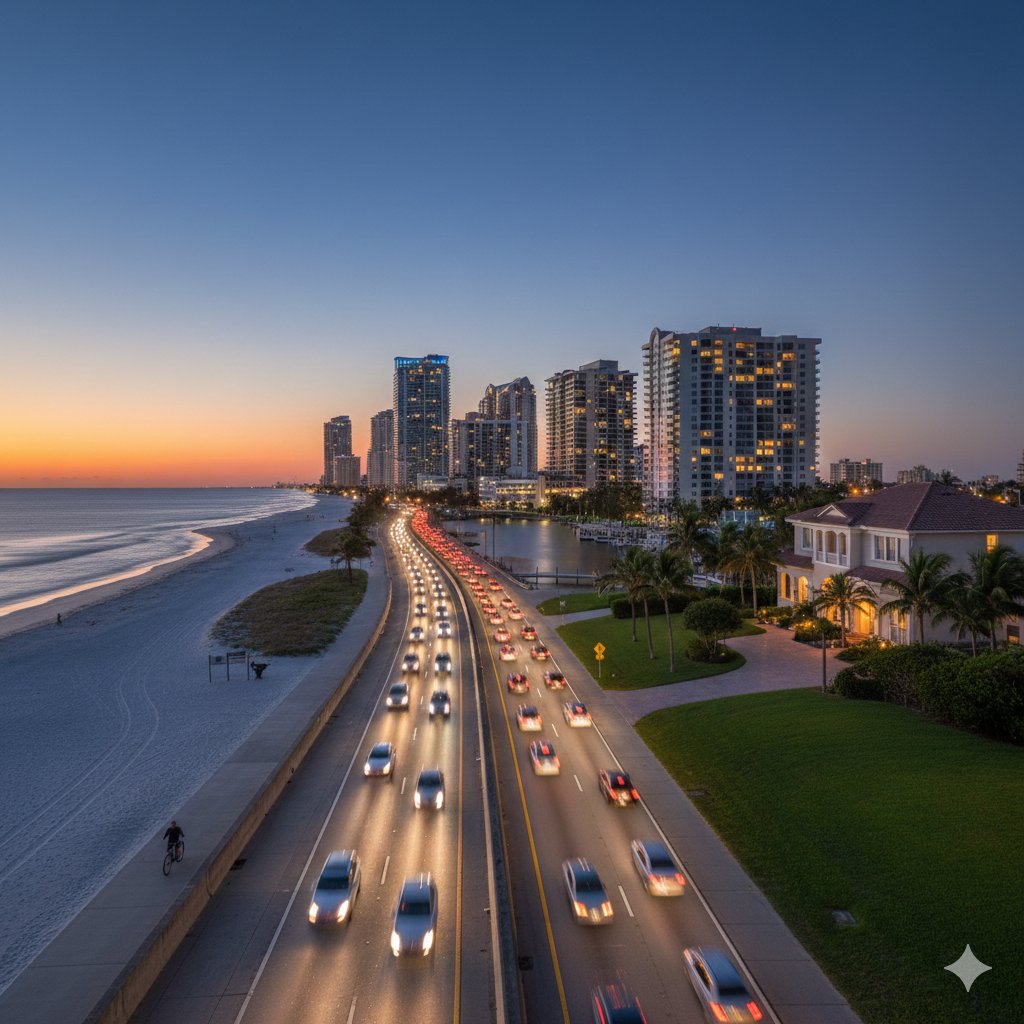
Pros & Cons of Living in West Palm Beach: A Smart Buyer’s Guide
If you’re considering a move to South Florida, chances are West Palm Beach is already on your radar—and for good reason. Between the waterfront lifestyle, a growing business ecosystem, and easy access to Palm Beach and Miami, the city has become a real contender for executives, entrepreneurs, investors, and young families who want a high-quality home base.
But before you make a six- or seven-figure decision, it’s worth getting honest about the real pros and cons of living in West Palm Beach Florida—not just the highlight reel. Social media shows the yachts and sunsets. It rarely shows insurance renewals, HOA budgets, or the difference between a “waterfront vibe” and actual waterfront ownership costs.
This guide breaks down what life here actually feels like: lifestyle, true ownership costs, waterfront reality, schools, privacy, connectivity, and long-term value. If you’re an affluent buyer or seller who wants clarity before making a major move, you’re in the right place.
Why West Palm Beach Has Become a Magnet for Wealth, Talent, and Capital
West Palm Beach didn’t become “hot” by accident. It’s been trending for a while, but the difference now is that the city is turning into a more complete ecosystem—meaning people aren’t just visiting; they’re relocating, building networks, and staying year-round. That matters for affluent buyers because durable demand is what protects long-term value when the market cools.
The executive relocation effect
If you’re researching West Palm Beach executive relocation patterns, focus on what actually drives high-income migration: airport access, daily convenience, and time savings. For leaders running companies or managing capital, “lifestyle” is not just beaches—it’s a calendar that runs cleaner. West Palm Beach offers that: quick access to Palm Beach International Airport, easier movement across Palm Beach County, and close proximity to Palm Beach (the island) without requiring Palm Beach pricing.
Infrastructure and the “sticky” factor
The best tell for whether a market stays premium is whether it builds real infrastructure that affluent residents actually use. West Palm Beach’s connectivity story includes Brightline rail service with a downtown station that’s set up to feel more “business class” than basic transit. Brightline’s own station information highlights amenities, hours, and downtown access points—details that sound small but matter when you’re optimizing time. (see references)
Unique insight: in luxury markets, follow friction
Competing articles mostly say “it’s sunny, it’s fun, it’s near the beach.” True—but that’s not why sophisticated buyers move. The real driver is friction reduction. If West Palm Beach removes daily stress (commute drag, airport chaos, constant noise), it becomes a performance upgrade. And that’s why the city keeps attracting affluent households even when affordability tightens.
The Real Cost of Living in West Palm Beach (Beyond the Headlines)
Most guides treat cost of living like a single number. That’s not how high-net-worth buyers should evaluate it. The cost of living in West Palm Beach luxury homes is a layered stack: purchase price + taxes + insurance + HOA/maintenance + lifestyle overhead. And depending on whether you’re downtown, historic, gated, or waterfront, that stack behaves very differently.
Housing costs: what the median doesn’t tell you
Redfin’s city-wide data is a helpful anchor point: it reported a median sale price of about $470K in December 2025 (and a higher median in early 2026). That’s useful context, but affluent buyers should treat “median” as background noise—because your actual target neighborhoods can swing wildly above or below that number. In other words: the city’s average doesn’t describe your reality if you’re shopping prime corridors, new construction, or waterfront.
Taxes: the residency lever that’s easy to miss
Palm Beach County’s Property Appraiser notes that Florida’s homestead exemption can generally save $750–$1,000 per year in property taxes for eligible permanent residents. That might not sound dramatic to high earners, but it’s not the dollar amount alone—it’s what it signals: a residency strategy that can reduce recurring expenses and improve predictability over time.
Insurance: the “hidden mortgage” in coastal Florida
Here’s where many first-time Florida buyers get surprised. Insurance costs (and coverage terms) can become the most unpredictable line item in your annual budget. The swing depends on roof age, construction type, elevation, proximity to water, and claims history. For luxury buyers, the pain isn’t “can I afford it?”—it’s “do I want this much volatility in a recurring expense?”
HOA and condo fees: what matters is reserves
HOA fees aren’t automatically bad. In premium buildings, fees can fund staffing, security, amenities, and proper maintenance. The problem is when reserve funding is weak or deferred maintenance gets kicked down the road. That’s how special assessments happen—and nothing ruins the luxury experience faster than “surprise” ownership costs.
Unique insight: stress-test the annual carry cost
Instead of asking “what’s the monthly payment,” affluent buyers should ask: what’s the worst-case annual carry cost if insurance increases, HOA reserves tighten, or maintenance spikes? In West Palm Beach, the best assets aren’t always the flashiest. They’re the ones with the most predictable ownership profile.
The Pros of Living in West Palm Beach
If you only remember one thing: West Palm Beach is a market where “luxury” often means less friction, not more flash. Yes, it’s beautiful. But the best pros are practical—especially for executives, investors, and families who want their environment to support a high-performance life.
1) Connectivity that actually improves daily life
Airport access is a real advantage here. Palm Beach International Airport hit a record 8,021,505 passengers over a 12-month period (May 2023 through May 2024), according to the airport’s published release. That kind of volume is a sign of strong regional connectivity—and for affluent households, connectivity is quality of life.
2) Balanced lifestyle without constant intensity
West Palm Beach sits in a sweet spot: near Palm Beach’s high-end ecosystem and within reach of Miami’s energy, but with a calmer day-to-day cadence. For many people, that’s the best version of South Florida living—premium dining, culture, and waterfront access without being stuck in a nonstop scene.
3) Tax structure and residency strategy
Florida’s tax structure is a major draw for high earners. Combine that with homestead benefits (if eligible) and you have a practical wealth-planning angle that many general “moving guides” barely explain.
Unique insight: “middle lane” luxury is a feature
Some markets give you luxury but also crowds, noise, and constant social pressure. Others give you privacy but can feel limited. West Palm Beach’s advantage is the middle lane: high-quality living with a more usable routine. For affluent buyers, routine is the real luxury.
The Cons of Living in West Palm Beach (What Most Articles Don’t Tell You)
If you’re affluent, the “cons” aren’t about whether there’s a cute café or good weather. The cons are about risk, volatility, and friction—things that steal time or surprise your balance sheet.
1) Hurricanes: the risk is real, but manageable with planning
You don’t need to be paranoid—just prepared. NOAA’s hurricane preparedness guidance is blunt: understand your risk and take pre-season steps before storms arrive. That includes supply planning, communication plans, and knowing your evacuation zone. The National Weather Service also emphasizes evacuation planning as a core step if you live in an evacuation area.
2) Insurance and ownership unpredictability
Coastal Florida is not the place to wing it with insurance. Buyers should get quotes early (not at the end of escrow) and treat insurability as part of the underwriting. If a property is hard to insure or requires unusual deductibles, that affects resale demand and your future buyer pool.
3) Seasonal congestion (and seasonal service quality)
Peak season is real. The city feels busier, restaurants are tighter, traffic is heavier, and service providers can be stretched. Off-season is calmer, easier, and often more “livable.” If you’re moving here, it’s smart to test-drive a normal week in a non-peak month so you understand the baseline.
Unique insight: the real “con” is opportunity cost
In luxury markets, “cons” show up as wasted time. Buying the wrong building or the wrong exposure doesn’t just cost money—it costs energy: dealing with HOA issues, chasing insurance, handling maintenance surprises. Smart buyers pay for quality underwriting upfront to avoid expensive friction later.
Waterfront Living in West Palm Beach: Dream vs. Due Diligence
Waterfront is the lifestyle flex—until you own it. The dream is the view, boating access, and that “this never gets old” feeling. The reality is that waterfront ownership is a maintenance business wrapped in a beautiful asset.
What “waterfront” actually costs
If you’re exploring living in West Palm Beach waterfront homes, budget for the things most listing photos don’t show: seawalls, docks, lifts, drainage systems, and long-term corrosion exposure. Salt air is not a vibe—it’s a slow, relentless mechanic.
Flood risk is not just about today—it’s about resale
Flood zones and elevation affect insurance, and insurance affects liquidity. If coverage terms tighten in the future (or costs jump), the buyer pool narrows. That’s why serious waterfront buyers treat flood risk as both a pricing factor and an exit-strategy factor.
Boating access is not one-size-fits-all
“Waterfront” can mean Intracoastal, canal-front, or lake-front. Each comes with different realities: wake zones, channel depth, fixed bridges, and docking logistics. A property can look incredible and still be annoying for actual boating use if access is restricted.
Unique insight: buy the infrastructure, not the photo
The best waterfront deals aren’t always the prettiest. They’re the most structurally sound: modern seawalls, documented permits, strong drainage, and clean inspection results. That’s how you get the lifestyle without inheriting a money pit.
Neighborhoods and Micro-Markets That Matter
West Palm Beach isn’t one market—it’s a set of micro-markets with different vibes, pricing behavior, and risk profiles. This is why “city-wide averages” don’t help much when you’re targeting high-end life. The best move is to identify the corridor that matches your priorities: privacy, walkability, water access, schools, airport proximity, and future upside.
Downtown & Flagler corridor
Downtown can be ideal if you want a more urban lifestyle: restaurants, culture, and walkability. It’s also where transit connectivity (Brightline) matters most. It’s a good fit for buyers who value convenience and don’t want to manage a large property.
Historic districts and character neighborhoods
Areas with historic charm can deliver an unmatched “feel,” but they require stronger diligence: older systems, older roofs, and maintenance planning. For some buyers, the character is worth it. For others, it’s a lifestyle tax.
Gated and privacy-oriented options
If you want West Palm Beach gated communities, you’re often buying predictability: controlled access, consistent community rules, and fewer surprises. The trade-off is HOA governance and restrictions—fine if aligned with your lifestyle, annoying if not.
Unique insight: pick a neighborhood that protects your schedule
Luxury isn’t just finishes. Luxury is time efficiency. The right neighborhood reduces friction: school runs, airport access, and daily errands. The wrong neighborhood feels “nice” but quietly steals hours every week.
Lifestyle Analysis: What Daily Life Actually Feels Like
Most “pros and cons” articles describe attractions. That’s helpful, but it doesn’t answer the real question: what does life feel like on a random Tuesday? West Palm Beach often works best for high performers because it supports a lower-friction routine without sacrificing quality of life.
Work-life balance for high performers
If you’re running a business, managing a portfolio, or leading a team, your home base needs to reduce stress—not add it. West Palm Beach is attractive because it’s not constantly demanding your attention. You can have a premium lifestyle and still maintain a grounded routine.
Wellness and outdoor living are not “extras” here
Outdoor training, boating, and year-round movement make wellness feel more natural. For many affluent buyers, this is a key advantage over larger metros where lifestyle requires more effort.
Seasonality changes the city’s personality
In winter, West Palm feels more active and social. In summer, it’s calmer, less crowded, and more predictable. If you’re relocating, it’s smart to experience both seasons so your decision is based on reality, not a perfect weekend.
Unique insight: decision fatigue is the hidden cost of big-city living
When people talk about “quality of life,” they often mean “less decision fatigue.” West Palm Beach’s biggest lifestyle advantage is that it reduces the number of small stressors that pile up every day. That’s why the city is sticky for executives and families alike.
Raising a Family in West Palm Beach
The question isn’t just “is West Palm Beach family-friendly?” It’s how family-friendly it is for your specific lifestyle. For affluent families, the biggest variables are school strategy, commute logistics, and community fit.
Schools: public, private, and strategic planning
If you’re searching is West Palm Beach a good place to live for families, you’ll find broad opinions. The truth is more nuanced. Some families prioritize private options; others use magnet programs; some do a hybrid approach over time. The key is to decide early, because your school plan influences your neighborhood choice.
Commute patterns matter more than people expect
A “great” school can become a daily headache if it adds long commutes during peak traffic windows. And for high-performing parents, that time loss can feel expensive. The best family setups protect mornings and afternoons—because that’s when life either feels calm or chaotic.
Family lifestyle: outdoors, enrichment, and routine
Outdoor living is a huge benefit for kids: water activities, parks, sports, and a year-round option set. If you want your children growing up with a healthy, active lifestyle, West Palm Beach supports that naturally.
Unique insight: school is a time-management decision
Many buyers pick neighborhoods first and figure out schools later. That’s backwards. If you’re a high-income family optimizing for quality of life, the smartest move is to build the weekly schedule first—then choose the neighborhood that makes it work.
Transportation, Connectivity, and Regional Access
Connectivity is one of West Palm Beach’s quiet superpowers. If your life includes frequent travel, regional meetings, or family spread across Florida, transit convenience becomes a major part of your daily experience.
Brightline connectivity
Brightline positions West Palm Beach as part of a broader Miami-to-Orlando corridor, with a downtown station and amenities geared toward a premium experience. Brightline’s own information highlights the West Palm Beach station details and service framing, including connectivity options. The Orlando station information notes that the ride between Orlando and West Palm Beach is approximately two hours. This is meaningful if you split time between Central and South Florida.
Airport access and why it matters for affluent buyers
Palm Beach International Airport’s record passenger volume (over 8 million passengers in a 12-month span) is a signal: the region is connected, active, and growing. For executives and second-home owners, airport convenience can directly influence how often you actually use your home base.
Driving patterns and seasonality
Driving is still the default for most residents, but peak season changes travel times. For affluent buyers, the real strategy is to choose a neighborhood that makes your most common routes easier: school runs, airport, office, and your “default” dining or wellness corridor.
Unique insight: transportation is a lifestyle multiplier
Transportation isn’t just “can you get there?” It’s “how often will you actually do it?” When connectivity is easy, your lifestyle radius expands. That’s a competitive advantage compared to markets where movement is a daily grind.
Healthcare, Wellness, and Longevity Infrastructure
Healthcare is like schools: you don’t think about it every day—until you really need it. For affluent buyers planning a long-term home base, healthcare depth is a major factor in confidence and market stability.
Cleveland Clinic’s expansion plans
Cleveland Clinic announced plans tied to a new hospital in West Palm Beach, including approximately 150 inpatient beds, an emergency department, and related facilities, according to its newsroom statement. Healthcare investment like this is a signal of long-term regional confidence—and it can increase demand from executives, families, and retirees who care about high-quality care access.
Wellness culture
West Palm Beach also benefits from a strong wellness ecosystem: boutique fitness, outdoor recreation, and a lifestyle that makes movement easier. For high performers, this isn’t “nice to have”—it’s part of maintaining performance and longevity.
Unique insight: healthcare is an underrated value driver
In premium markets, healthcare depth makes communities more “sticky.” It supports aging-in-place, reduces relocation pressure, and helps adult children feel comfortable with parents living nearby. That kind of stickiness supports long-term housing demand.
Investment Potential and Long-Term Appreciation
If you’re evaluating West Palm Beach as an investment—or you simply care about protecting equity—the question isn’t “will it go up?” It’s: how durable is demand, and what catalysts support long-term value?
Market reality: price anchoring and liquidity
Redfin’s reporting of a median sale price around $470K in December 2025 gives a baseline for the city’s general market. For affluent buyers, the bigger value is understanding how your specific micro-market behaves: days on market, buyer pool composition, and resilience during rate shifts.
Executive leasing and seasonal demand
West Palm Beach benefits from both executive relocation and seasonal demand. That can support rental liquidity and help owners maintain flexibility—especially for second-home strategies. If you’re thinking in portfolio terms, this flexibility matters.
Unique insight: treat your purchase like a portfolio decision
Sophisticated buyers do well here when they pair lifestyle with underwriting. One “core” asset is the home you’d happily keep long-term. The second layer is “optional upside”—a corridor with redevelopment, or a property type that benefits from long-term infrastructure improvements. That’s how you enjoy the lifestyle and still maintain an intelligent investment thesis.
Privacy, Security, and Discretion in Luxury Living
Privacy is a luxury feature, and West Palm Beach gives you multiple ways to buy it. The key is understanding that privacy comes from more than gates and security systems—it comes from predictability.
Urban luxury (condos) vs. estates vs. gated communities
Condos can offer controlled access, staffing, and “lock-and-leave” convenience. Estates offer space and discretion but require more hands-on management. Gated communities can reduce exposure and improve predictability, but HOA governance becomes part of the experience.
Peak season and visibility
The city’s visibility increases in peak season. If you value discretion, your best move is choosing locations and property types that maintain stability year-round—whether that’s a well-managed building, a quiet pocket, or a community with consistent rules.
Unique insight: discretion is about culture, not just security
Some areas feel more “scene-driven,” others feel more private by default. That cultural difference affects your day-to-day comfort. For affluent buyers, cultural alignment is just as important as physical security.
Renting vs. Buying in West Palm Beach
If you’re relocating, there’s a smart argument for renting first—but only if you do it intentionally. Renting can help you test neighborhood feel, commute friction, peak-season congestion, and what your “normal week” looks like here.
When renting makes sense
- You’re new to the area and want to validate lifestyle fit.
- You want to experience both peak season and off-season before committing.
- You’re deciding between downtown, historic, gated, or waterfront options.
When buying makes sense
- You’re confident in your micro-market choice and plan to hold long-term.
- You want to pursue homestead benefits (if eligible) and stabilize long-term costs.
- You’re targeting a property with predictable insurance/maintenance profiles.
Unique insight: renting buys information, buying secures position
For affluent households, the rent vs buy question is usually “information vs commitment.” A smart strategy is a 60–90 day lifestyle audit: rent in the corridor you think you’ll buy in, track friction points (traffic, noise, convenience), then buy with clarity.
Strategic Buying and Selling Tips for High-Net-Worth Clients
High-end real estate is not just “find a pretty home.” It’s underwriting, risk management, and future resale positioning. If you’re evaluating the pros and cons of living in West Palm Beach Florida at the luxury level, your advantage comes from diligence—not emotion.
Buying: run a real due diligence checklist
For single-family and historic homes
- Roof age and wind-mitigation eligibility
- Electrical/plumbing condition and permits
- Drainage and water intrusion history
- Insurance quotes early (not late)
For condos
- Reserve funding and financial statements
- Maintenance history and planned projects
- Special assessment risk
- Insurance coverage structure and building policies
For waterfront properties
- Seawall age and condition
- Dock permits, lift specs, and compliance
- Flood zone, elevation info, and coverage requirements
- Access logistics (bridges, wake zones, depth)
Selling: market the risk management, not just the pretty
Most listings sell the finishes. Smart luxury marketing sells the confidence story: documented upgrades, permits, insurable features, and clean ownership history. In today’s market, buyers pay a premium for predictability.
Unique insight: “insurability” is a luxury feature now
Buyers are increasingly underwriting insurance and long-term costs as part of value. Properties that are easier to insure, easier to maintain, and easier to understand will outperform “pretty” properties with complicated ownership risk.
Common Mistakes Affluent Buyers Make
The most common mistakes aren’t rookie errors like “forgetting to measure the living room.” They’re strategic mistakes that create expensive friction later.
- Underestimating insurance volatility and waiting too late to quote coverage.
- Ignoring HOA reserve health and buying into deferred maintenance risk.
- Buying on aesthetics without underwriting infrastructure (roof, drainage, seawall).
- Not stress-testing annual costs (insurance + HOA + maintenance) against worst-case scenarios.
- Not planning the exit: resale liquidity matters even if you plan to stay “forever.”
Pretty properties with weak fundamentals underperform. The best homes are the ones that feel great and run clean behind the scenes.
Quick Takeaways
- West Palm Beach offers balanced luxury: premium living without constant intensity.
- The real cost stack includes taxes, insurance, HOA, and maintenance—not just purchase price.
- Waterfront living is a dream when infrastructure is solid—and a headache when it’s not.
- Neighborhood choice is strategic: it affects time, privacy, and resale demand.
- Connectivity (airport + rail) is a lifestyle multiplier for executives and families.
- The best buyers prioritize predictability over perfection.
- Long-term value is driven by infrastructure and durable demand, not trends.
FAQs
1) Is West Palm Beach a good place to live for families?
Yes—especially if you build a clear school and commute strategy. The best family experience usually comes from choosing a neighborhood that protects your routine (school runs, after-school activities, weekend movement) rather than chasing a “popular” zip code.
2) What is the real cost of living in West Palm Beach for luxury homeowners?
The cost of living in West Palm Beach luxury homes often comes down to annual carrying costs: property taxes, insurance, HOA/condo fees, and maintenance. Buyers who underwrite predictability (roof age, reserves, elevation) usually have the best long-term experience.
3) Are waterfront homes in West Palm Beach worth it?
Living in West Palm Beach waterfront homes can be absolutely worth it if the infrastructure is strong—seawall, permits, drainage, and insurability. If those basics are weak, waterfront can turn into a high-maintenance investment with resale risk.
4) How does West Palm Beach compare to Boca Raton for long-term living?
In the “West Palm Beach vs Boca Raton living” comparison, West Palm often offers more urban convenience and (in some cases) better value relative to Palm Beach-adjacent prestige. Boca can feel more established suburban luxury. The right choice depends on whether you want walkability and downtown access vs. traditional community layouts.
5) What should I prioritize most when weighing the pros and cons of living in West Palm Beach Florida?
Prioritize predictability: insurance quotes early, reserve health for condos, infrastructure quality for waterfront, and neighborhood logistics that protect your schedule. The best decision is the one that supports your lifestyle and your long-term exit strategy.
Conclusion
West Palm Beach isn’t just a South Florida destination—it’s a strategic lifestyle choice. For executives, investors, and families who value efficiency, privacy, and long-term stability, it offers something rare: high-quality coastal living without constant intensity. The appeal isn’t limited to sunshine or waterfront views. It’s rooted in connectivity, growing infrastructure, and a city that increasingly supports high performance without feeling like a daily grind.
At the same time, the pros and cons of living in West Palm Beach Florida go deeper than most headlines. Insurance volatility, waterfront maintenance realities, neighborhood dynamics, and building financials can make the difference between a smart, enjoyable asset and a long-term frustration. The buyers who win here focus on predictability—strong underwriting, clean building reserves, insurable property features, and a resale story that will still make sense years from now.
If you’re considering a move, an upgrade, or an investment, your goal shouldn’t be to find “a nice home.” It should be to secure a property that aligns with your lifestyle, protects your capital, and supports your long-term plans.
Call to action: If you want a clear, data-driven strategy tailored to your goals—whether that’s waterfront living, family relocation, or portfolio growth—connect with Madriz Collective. Let’s evaluate your options, reduce uncertainty, and position you to make a confident, high-performing move in West Palm Beach.
Join the Conversation
Did this guide help you see West Palm Beach more clearly? If you found these insights useful, share this article with a friend, colleague, or family member who’s considering relocating, investing, or upgrading in South Florida.
I’d also love your take: What’s the biggest factor influencing your decision right now—lifestyle, investment potential, schools, waterfront access, or long-term costs?
References
- Palm Beach International Airport – “PBI Sets 8 Million Passenger Record” (June 2024)
- Palm Beach County Property Appraiser – Homestead Exemption (savings estimate)
- Cleveland Clinic Newsroom – Hospital and service expansion plans (Dec 2024)
- Brightline – West Palm Beach Station Details
- Brightline – Orlando Station (published travel time information)
- NOAA – Hurricane Preparedness Guidance
- National Weather Service – Hurricane Evacuation Planning Guidance
