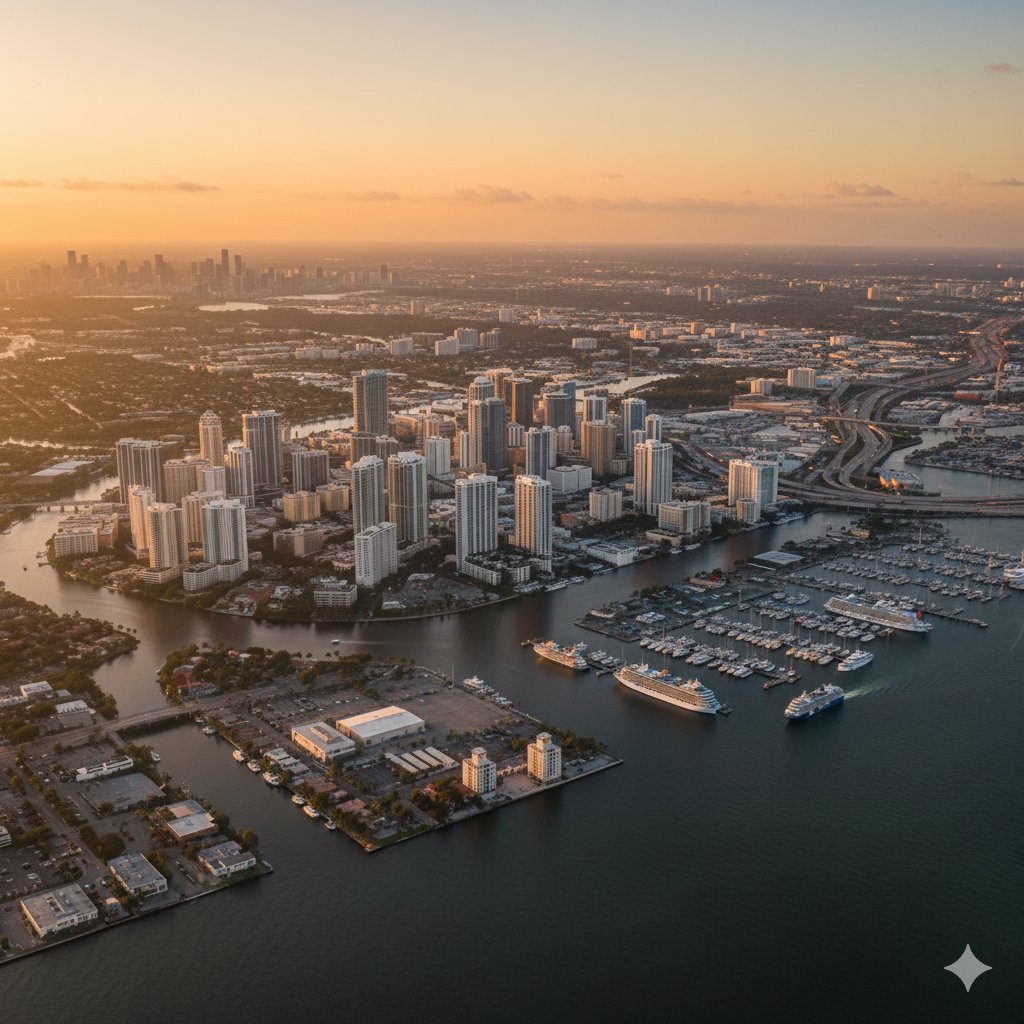
Fort Lauderdale’s Proximity to Miami: A Strategic Guide
Fort Lauderdale’s proximity to Miami is one of those advantages people think they understand—until they actually live here. On paper, it’s just a short drive north. In reality, it’s the difference between paying Miami prices and still having Miami access. That’s why professionals, executives, remote workers, and relocating buyers are increasingly choosing Fort Lauderdale as a strategic home base rather than defaulting to Miami itself.
This guide goes beyond simple mileage. We break down real commute times, train vs driving trade-offs, airport and port access, and multi-city connectivity—the factors that actually shape day-to-day life. You’ll see how Fort Lauderdale connects not only to Miami, but also to Boca Raton, Delray Beach, and West Palm Beach, and why that central positioning is becoming a decisive advantage.
Why Proximity Matters in South Florida Real Estate Decisions
In South Florida, proximity isn’t about miles—it’s about friction. How much time do you lose commuting? How predictable is your schedule? How often do you actually need to be in Miami versus how often you’re just paying to be nearby?
Fort Lauderdale’s advantage is optionality. You can live in a calmer, more livable environment while still tapping into Miami’s business ecosystem, global airports, dining, culture, and networking when needed. This flexibility is why many people describe Fort Lauderdale as a hedge city.
How Far Is Fort Lauderdale From Miami?
- Distance: Approximately 25 miles
- Driving: 30–45 minutes off-peak, 60–90+ minutes during rush hour
- Train: Roughly 38–45 minutes
Distance alone is misleading. What matters is time certainty, not mileage. If predictability matters, rail wins. If flexibility matters, driving still has a role.
Fort Lauderdale to Miami: Transportation Options Compared
Driving (I-95, US-1, Florida’s Turnpike)
Driving offers flexibility but little predictability. Traffic patterns can change dramatically due to weather, accidents, or events.
Brightline (Executive-Friendly Rail)
Brightline provides downtown-to-downtown service with consistent timing, making it ideal for professionals who value schedule certainty and productivity while traveling.
Tri-Rail (Value-Driven Commuter Rail)
Tri-Rail remains the most cost-effective option and is widely used for airport access and daily commuting.
Door-to-Door Reality: What Commutes Actually Feel Like
Commutes happen door to door, not station to station. This is why Fort Lauderdale works best for hybrid schedules and professionals who commute only when it truly matters.
Fort Lauderdale’s Central Position Between Key Cities
Fort Lauderdale sits between Miami, Boca Raton, Delray Beach, and West Palm Beach. This allows residents to access multiple business and lifestyle hubs without committing to one extreme.
Fort Lauderdale to Other Key Cities
- Miami: ~25 miles
- Boca Raton: ~20 miles
- Delray Beach: ~25 miles
- West Palm Beach: ~45–50 miles
Airport Access for Frequent Travelers

Living in Fort Lauderdale gives you access to three major airports: Fort Lauderdale-Hollywood International (FLL), Miami International (MIA), and Palm Beach International (PBI).
Ports and Global Connectivity

Proximity to Port Everglades and PortMiami influences regional traffic, tourism, and infrastructure—even for residents who never cruise.
Lifestyle Without Isolation
Choosing Fort Lauderdale doesn’t mean giving up Miami. It means using Miami intentionally rather than being consumed by it daily.
Cost Comparison: Value Over Hype
The advantage of Fort Lauderdale isn’t always price—it’s what you get for your money. More livable neighborhoods, less friction, and comparable access.
Best Fort Lauderdale Neighborhoods for Access
- Downtown / Las Olas: Walkable, Brightline access
- Dania Beach / Airport Corridor: Travel convenience
- North Fort Lauderdale: Easier access to Boca and Palm Beach
Remote & Hybrid Professionals
Even remote workers need airports, meetings, and networking. Fort Lauderdale supports flexibility without isolation.
Fort Lauderdale vs Miami
Miami offers intensity. Fort Lauderdale offers control. The better city depends on how you actually live.
Quick Takeaways
- Fort Lauderdale is close enough to Miami to stay connected
- Predictability matters more than distance
- Multi-city access increases flexibility
- Airport choice is a major advantage
- The real value is optionality
Frequently Asked Questions
Is Fort Lauderdale close enough to commute to Miami?
Yes, especially for hybrid or part-time commuting.
What’s the average commute time?
Anywhere from 35 to 60+ minutes depending on timing and transportation.
Is Fort Lauderdale good for relocation?
Yes, if you want balance, access, and flexibility.
Conclusion
Fort Lauderdale’s proximity to Miami is not just a convenience—it’s a strategic advantage. You gain access to opportunity without absorbing daily intensity. For many professionals, this balance is the real upgrade.
Call to Action: If you’re considering a move or investment in South Florida, explore Fort Lauderdale neighborhoods that align with your work patterns, travel habits, and long-term goals.
Engagement
If this guide helped you rethink Fort Lauderdale vs Miami, share it with someone considering a move. Would you choose calmer living with access—or nonstop city energy?
References
- Brightline – South Florida Route Information
- Tri-Rail – System Map and Airport Connections
- Fort Lauderdale-Hollywood International Airport (FLL)
- Miami International Airport (MIA)
- Port Everglades & PortMiami Reports
