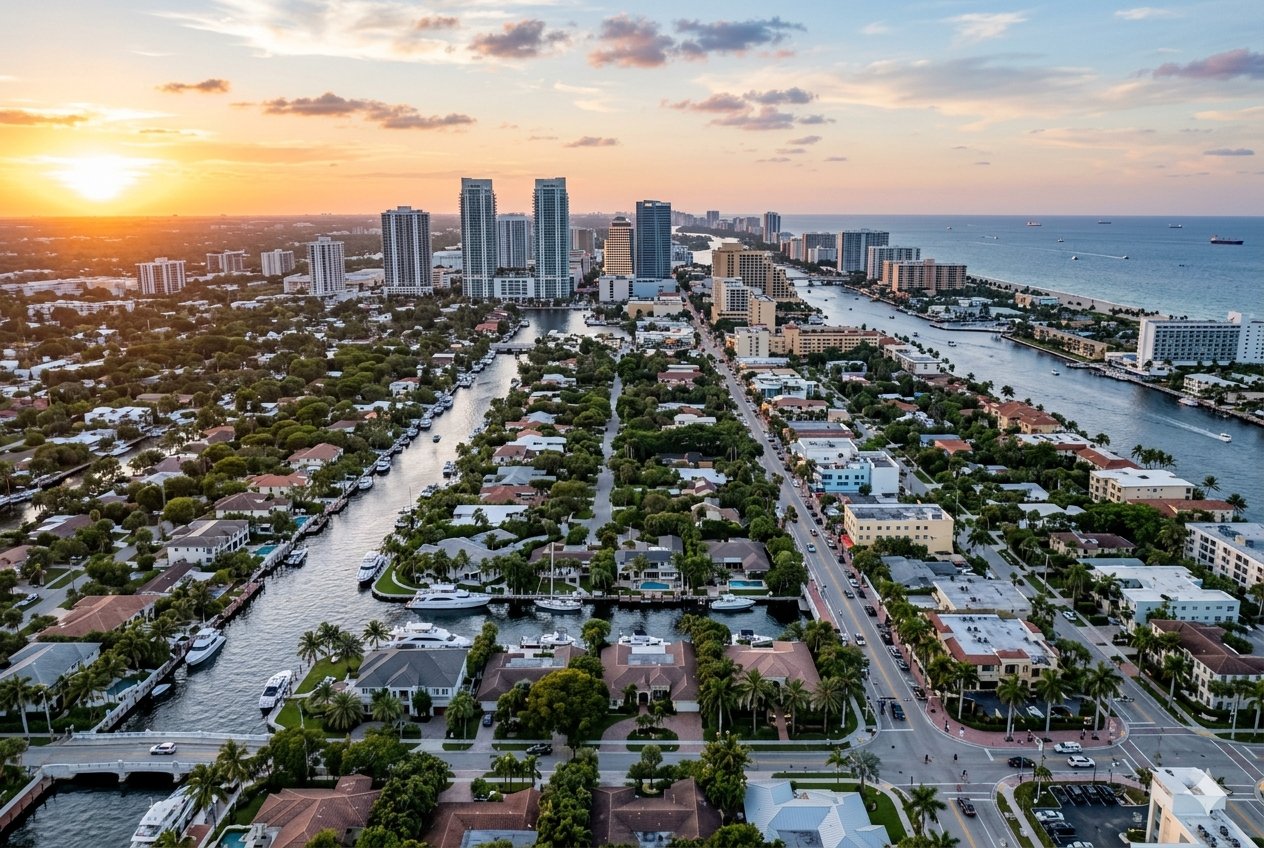
Fort Lauderdale Waterfront Properties: Luxury Living
Fort Lauderdale waterfront properties have a rare kind of pull. They are not just homes with a view — they represent privacy, prestige, boating access, and the kind of South Florida lifestyle that many buyers spend years trying to secure. From deep-water estates near Las Olas Isles to Intracoastal residences, canal-front homes, and luxury condos overlooking the water, Fort Lauderdale continues to attract affluent homebuyers, luxury investors, relocating executives, and homeowners watching the market for the right time to sell.
What makes these properties so desirable is the combination of lifestyle and long-term value. Buyers are drawn to private docks, ocean access, outdoor entertaining, and proximity to beaches, marinas, dining, and business hubs. Sellers, meanwhile, may benefit from demand for quality waterfront inventory, especially when a property offers strong boating utility and premium presentation.
Fort Lauderdale’s official identity supports that appeal. The city is known for its 165 miles of scenic inland waterways, one of the major reasons it carries the “Venice of America” reputation [1]. For buyers and sellers, that matters. The water is not just part of the scenery. It shapes lifestyle, property value, buyer demand, boating culture, and long-term real estate strategy.
In this guide, we’ll break down the allure of Fort Lauderdale’s waterfront properties, including the lifestyle benefits, top neighborhoods, boating considerations, value drivers, buyer mistakes to avoid, and what waterfront homeowners should know before selling.
Quick Takeaways
- Fort Lauderdale waterfront properties offer more than views — they combine privacy, boating access, outdoor living, and long-term lifestyle value.
- Not all waterfront homes are equal. Dock length, water depth, bridge clearance, seawall condition, and ocean access can dramatically impact value.
- Luxury buyers pay premiums for usable waterfront. Homes with private docks, no fixed bridges, and strong boating access tend to stand out more than properties with water views alone.
- Neighborhood choice matters. Las Olas Isles, Rio Vista, Harbor Beach, Seven Isles, Coral Ridge, and Bay Colony each attract different types of waterfront buyers.
- Waterfront ownership comes with extra due diligence. Buyers should review flood insurance, wind protection, seawall condition, dock permits, and long-term maintenance costs before making an offer.
- Sellers need more than standard luxury marketing. The strongest waterfront listings highlight lifestyle, boating utility, water frontage, outdoor entertaining, and technical property advantages.
- The best Fort Lauderdale waterfront properties act like lifestyle assets. When beauty, location, water access, and scarcity align, the home becomes both a private retreat and a long-term real estate asset.
What Makes Fort Lauderdale Waterfront Properties So Desirable?
The appeal of Fort Lauderdale waterfront properties starts with scarcity. There is only so much land on the water, and not every waterfront lot offers the same level of value. Some homes sit on narrow canals with limited boating function. Others offer deep-water access, wide turning basins, no fixed bridges, and dockage that can accommodate larger vessels.
That difference matters, especially for buyers who see the property as both a luxury home and a lifestyle platform.
For affluent buyers, the water creates a daily experience. It gives the home a sense of openness, privacy, and calm that is difficult to manufacture inland. A backyard pool is nice. A backyard pool overlooking a private dock, canal, or Intracoastal view is a completely different tier. That is why luxury waterfront homes in Fort Lauderdale tend to carry emotional value beyond square footage.
For investors, scarcity can create long-term support. Waterfront land in established neighborhoods is not easy to reproduce. When a property has strong water frontage, good elevation, updated systems, and functional boating access, it can appeal to multiple buyer groups:
- Boaters
- Executives
- Retirees
- Seasonal residents
- International buyers
- Long-term luxury investors
Fort Lauderdale’s waterfront geography strengthens that demand. With miles of inland waterways running through the city, the waterfront lifestyle is built directly into the local identity [1]. Buyers are not just buying a house near water. In many cases, they are buying access to the city’s most recognizable lifestyle feature.
The unique insight most listing pages miss is this: waterfront demand is not only about beauty. It is about optionality.
A waterfront owner can live, entertain, boat, lease, renovate, rebuild, or eventually sell to a buyer who wants land and access. That optionality is where much of the premium lives. In Fort Lauderdale, the water is not just the backdrop. It is the amenity, the status symbol, and in many cases, the value driver.
The Fort Lauderdale Waterfront Lifestyle
The Fort Lauderdale waterfront lifestyle is built around ease. You can start the day with coffee overlooking the canal, take a boat out in the afternoon, meet friends near Las Olas, and return home without feeling like you left your private resort.
That rhythm is what affluent buyers are really purchasing. The home becomes a base for boating, entertaining, relaxing, and accessing the best parts of South Florida without sacrificing privacy.
For relocating executives, this lifestyle is especially compelling. Fort Lauderdale offers proximity to beaches, marinas, dining, business hubs, private aviation options, and Fort Lauderdale-Hollywood International Airport. Compared with larger, more congested coastal cities, it can feel more livable while still delivering a premium waterfront experience.
That combination makes Fort Lauderdale ocean access homes attractive to buyers relocating from New York, California, Chicago, and international markets.
For seasonal residents, waterfront living also works because the home can feel like a vacation property without being disconnected from daily convenience. Restaurants, shopping, health care, schools, airports, and business districts are still nearby. That is a major advantage over more remote luxury coastal markets.
Primary Residence Lifestyle
For full-time residents, waterfront living offers daily access to outdoor space, privacy, and a stronger connection to the city’s boating culture. It can make everyday living feel elevated without requiring constant travel or weekend planning.
Second-Home Lifestyle
For seasonal buyers, Fort Lauderdale waterfront homes offer a lock-in lifestyle: sun, water, dining, boating, and entertainment in one market. The home becomes a seasonal retreat that still feels connected to a major South Florida city.
Executive Relocation Lifestyle
For executives, the value is not only the home. It is the ability to combine business access with a private coastal retreat. The ideal waterfront home should make the owner’s schedule easier, not more complicated.
A unique perspective: the best waterfront homes are designed for transitions. They move smoothly from indoor living to covered patio, pool deck, dock, boat, and open water.
When buyers tour these homes, they are not only evaluating bedrooms and finishes. They are imagining how their life flows through the property. Sellers who understand that can market the lifestyle more effectively. Buyers who understand it can avoid overpaying for a home that looks good in photos but does not actually live well.
Boating Access in Fort Lauderdale Waterfront Properties
In Fort Lauderdale, boating access can separate a good waterfront property from an exceptional one. Two homes may both sit on the water, but their values can be dramatically different based on:
- Dock length
- Water depth
- Bridge clearance
- Canal width
- Turning radius
- Ocean access
- Seawall condition
For serious boaters, those details are not minor. They determine whether the property can support the lifestyle the buyer is paying for.
Fort Lauderdale’s boating culture is not casual. The Fort Lauderdale International Boat Show is one of the strongest examples of the city’s marine identity. The event attracts more than 100,000 attendees and showcases more than 1,300 vessels, reinforcing the city’s position as a global boating and yachting destination [2]. That matters for waterfront real estate because boating is not an accessory to the local lifestyle. It is part of the market’s DNA.
Fort Lauderdale homes with private boat docks are especially attractive when they offer direct or convenient access to the Intracoastal and Atlantic Ocean. A property with no fixed bridges can be more desirable for yacht owners because taller boats may not be able to pass under certain bridges.
Searches for deep water dock Fort Lauderdale are popular for this reason. Buyers with larger vessels are not just searching for waterfront. They are searching for usable waterfront.
Ocean Access vs Intracoastal Access
Ocean access is one of the most important value drivers for boating buyers. A home with a shorter, easier route to open water can be far more attractive than a home with complicated navigation.
No Fixed Bridges vs Fixed Bridges
No fixed bridges means a boat can travel from the property to open water without passing under height-restricting bridges. For yacht owners, this can be a deal-maker.
Dock Length, Water Depth, and Yacht Compatibility
Dock length matters. A beautiful dock that cannot fit the buyer’s boat may have limited value to that specific buyer. Water depth matters too, especially at low tide. Canal width can affect maneuverability. Boat lifts, shore power, lighting, and dock condition can also influence buyer perception and future expenses.
What “Deep Water” Really Means
Deep water does not just mean the canal looks wide. Buyers need to confirm actual usable depth, especially if they own a larger vessel.
Why Bridge Clearance Matters
Bridge clearance can limit the type of boat a property can support. This is why Fort Lauderdale no fixed bridges homes often command serious attention.
Why Canal Width Affects Usability and Value
A narrow canal may be beautiful, but if turning or docking is difficult, that can limit its appeal to boating buyers.
The insight most consumers miss: the house and the water should be valued separately, then together. A renovated home with weak boating utility may not outperform an older home with superior water access, depending on the buyer pool.
For investors and sellers, this is critical. The most powerful marketing angle is not “waterfront home.” It is “waterfront home with the right boating function.” That is the language serious buyers respond to.
Understanding the Different Types of Fort Lauderdale Waterfront Properties
Not all Fort Lauderdale waterfront properties serve the same buyer. A waterfront single-family home offers privacy, land control, outdoor living, and often direct dock access. A waterfront condo may offer views, security, amenities, and lower personal maintenance, but it may come with HOA rules, shared dockage, rental restrictions, or limited boating access.
An Intracoastal estate may provide wide water views and prestige, while a canal-front home may deliver better privacy and dock convenience.
Waterfront Single-Family Homes
Single-family waterfront homes usually appeal to buyers who want control, privacy, outdoor space, and direct access to the water. These buyers may care about boating access, outdoor entertaining, pets, landscaping, pool design, and future renovation flexibility.
Luxury Waterfront Condos
Fort Lauderdale waterfront condos can make sense for seasonal residents, executives, and buyers who want views with less personal maintenance. The trade-off is that buyers need to carefully review HOA fees, reserves, insurance structure, building rules, assessments, and dock availability.
Intracoastal Estates
Intracoastal estates often deliver wide water views, prestige, and strong luxury appeal. These properties can feel more dramatic because the water exposure is often broader and more open than a narrow canal.
Canal-Front Homes
Canal-front homes often appeal to boaters who want protected dockage and direct backyard access. A strong canal-front property can offer privacy, functional dockage, and strong lifestyle value without always needing to sit directly on the Intracoastal.
Oceanfront Residences
Oceanfront residences appeal to buyers who prioritize beach access and sunrise views more than boating utility. These properties are often more about view, status, and coastal lifestyle than private vessel access.
New Construction Waterfront Homes
New construction waterfront homes attract buyers who want modern elevation, impact windows, open layouts, smart-home systems, and fewer immediate maintenance concerns.
Older waterfront homes can still be valuable, especially if the lot, water frontage, and location are strong enough to justify renovation or redevelopment.
For investors, the property type should match the exit strategy. A waterfront condo may be easier to maintain but harder to customize. A single-family waterfront home may require more upkeep but gives the owner more control over improvements, outdoor areas, and dock features.
The underused insight: waterfront property types should be evaluated by lifestyle fit, not just price.
A seasonal buyer who travels often may prefer a luxury condo with security and amenities. A yacht owner may need a no fixed bridges single-family home. A seller should understand which buyer profile their property truly serves, because marketing to the wrong audience weakens the listing.
Best Neighborhoods for Fort Lauderdale Waterfront Properties
Fort Lauderdale’s waterfront neighborhoods each have their own buyer profile. This is where buyers need to be careful. A neighborhood can look perfect on a map but still be wrong for the buyer’s lifestyle, boat, commute, family needs, or privacy expectations.
Las Olas Isles
Las Olas Isles waterfront homes are among the most recognized in Fort Lauderdale. The area offers canals, prestige, proximity to Las Olas Boulevard, and strong appeal for buyers who want luxury near restaurants, shopping, and the beach.
For buyers who want both water access and city energy, Las Olas Isles can be a powerful fit. It gives the feeling of waterfront privacy while keeping lifestyle amenities nearby.
Rio Vista
Rio Vista waterfront homes Fort Lauderdale offer a more residential feel with historic charm, tree-lined streets, and access to downtown. This makes the neighborhood attractive to executives and families who want lifestyle and convenience.
Rio Vista can be especially appealing to buyers who want a neighborhood feel rather than a purely trophy-estate environment.
Harbor Beach
Harbor Beach waterfront homes Fort Lauderdale are part of the ultra-luxury conversation. Harbor Beach is known for privacy, guard-gated appeal, large estates, and serious boating access.
For high-net-worth buyers who want security, prestige, and major water access, Harbor Beach is one of the names that consistently stands out.
Seven Isles
Seven Isles offers a strong luxury waterfront identity with proximity to Las Olas and boating-friendly canals. It can appeal to buyers who want central Fort Lauderdale luxury with serious dock potential.
Coral Ridge
Coral Ridge can appeal to buyers who want waterfront living near golf, schools, shopping, and the beach. It often attracts buyers who want a blend of lifestyle, convenience, and neighborhood usability.
Bay Colony
Bay Colony is known for security and exclusivity, often attracting high-net-worth buyers who value privacy. For buyers who place security at the top of the list, Bay Colony can be a serious contender.
Lauderdale Harbours
Lauderdale Harbours can offer strong boating appeal with a residential feel and convenient access to key parts of Fort Lauderdale. It may suit buyers who want practical boating access without the same profile as the most famous trophy neighborhoods.
Lauderdale Beach
Lauderdale Beach appeals to buyers who want a more beach-oriented lifestyle. This buyer may care more about ocean proximity, views, and coastal atmosphere than private canal dockage.
Coral Ridge Isles
Coral Ridge Isles may appeal to buyers seeking canal-front homes at a different price point than the trophy waterfront areas. For some buyers, it can offer access to waterfront living with a different budget profile.
The key is that “best” depends on the buyer. For a yacht owner, no fixed bridges and deep-water access may beat a trendier address. For a relocating executive, commute, school access, and proximity to dining may matter more.
For a seller, neighborhood positioning should be specific. “Waterfront in Fort Lauderdale” is too broad. “Las Olas Isles waterfront home with dockage near dining and ocean access” is stronger.
Luxury buyers pay for specifics, not vague waterfront language.
What Drives Waterfront Property Values in Fort Lauderdale?
Waterfront value in Fort Lauderdale is driven by a layered set of factors. The obvious ones are location, lot size, square footage, condition, and finishes. But waterfront properties require a deeper lens.
The most important value drivers often include:
- Water frontage
- View corridor
- Dock setup
- Seawall condition
- Ocean access
- Bridge restrictions
- Water depth
- Canal width
- Neighborhood prestige
A buyer may love the kitchen, but if the dock does not fit the boat, the property may fall out of consideration.
Water Frontage and Lot Size
More usable frontage can improve boating flexibility, privacy, and visual impact. A larger lot can also create more outdoor living options, from pool design to outdoor kitchens, covered lounges, and dockside entertaining areas.
Direct Ocean Access
Fort Lauderdale ocean access homes can command stronger attention because they support a more complete boating lifestyle. For a serious boater, the route from backyard to open water is part of the value equation.
Dock Setup and Boating Utility
The dock is not just an accessory. For boating buyers, it may be one of the most important parts of the property. Dock length, lift capacity, utilities, and ease of use can influence how quickly a buyer connects with the home.
Seawall Condition
Seawall condition is especially important because it can represent a major future cost. A home with a newer or well-maintained seawall may feel more secure to a buyer than a similar property with uncertainty.
Property Elevation and Flood Risk
Elevation, drainage, and flood-zone status can influence insurance, buyer confidence, and long-term ownership costs. In Broward County, updated FEMA Flood Insurance Rate Maps became effective July 31, 2024, making flood-zone review especially relevant for waterfront buyers and sellers [5].
Home Condition, Architecture, and Renovation Level
Luxury finishes still matter, but they are not everything. A fully renovated home on inferior water may not command the same buyer urgency as a less-updated home on superior water.
Neighborhood Prestige and Buyer Demand
A strong neighborhood can protect long-term resale value and attract a deeper buyer pool. In luxury waterfront markets, buyer confidence often comes from both the property and the neighborhood name.
The unique insight: Fort Lauderdale waterfront value is a blend of emotional value and operational value.
Emotional value comes from the view, prestige, and lifestyle. Operational value comes from how well the property performs for boating, insurance, maintenance, and long-term usability. The strongest properties usually have both.
Fort Lauderdale Waterfront Homes vs Waterfront Condos
The choice between a waterfront home and a waterfront condo comes down to control, maintenance, privacy, and lifestyle.
A single-family waterfront home gives the owner more control over the dock, outdoor space, pool, landscaping, pets, privacy, renovations, and entertaining. For boaters, that control can be a major advantage. If the property has private dockage, ocean access, and strong seawall condition, it may serve as both a residence and a boating base.
Fort Lauderdale waterfront condos are different. They can offer:
- Security
- Amenities
- Concierge services
- Gyms
- Pools
- Covered parking
- Lower personal maintenance
For seasonal residents and executives who travel often, that lock-and-leave convenience can be valuable.
However, condo buyers need to review HOA fees, reserves, assessments, insurance structure, rental restrictions, pet rules, dock availability, and whether boat slips are deeded, leased, assigned, or waitlisted.
Best Fit for Full-Time Residents
A single-family waterfront home may be better for full-time residents who want privacy, outdoor space, and control. It gives the owner the ability to shape the property around daily lifestyle.
Best Fit for Seasonal Buyers
A waterfront condo may be better for seasonal buyers who value simplicity, security, and amenities. For buyers who spend only part of the year in Fort Lauderdale, convenience can outweigh control.
Best Fit for Investors
Investors should be especially careful. A waterfront condo may look easier to manage, but rental restrictions can limit income potential. A single-family home may have higher maintenance but more flexibility.
The insight competitors rarely explain: condos sell convenience, while homes sell control.
If a buyer values freedom, privacy, dock access, and customization, a single-family waterfront home may be the better fit. If a buyer values security, simplicity, and amenities, a condo may make more sense.
Why Luxury Investors Are Drawn to Fort Lauderdale Waterfront Real Estate
Luxury investors are drawn to Fort Lauderdale waterfront real estate because it sits at the intersection of scarcity, lifestyle demand, and global buyer appeal.
Waterfront land in established neighborhoods cannot be mass-produced. When an asset offers strong boating access, quality construction, privacy, and a desirable address, it can appeal to wealthy end users as much as traditional investors. That dual demand can support long-term value.
The investment case is not only about rental income. In the luxury segment, many investors are looking at:
- Appreciation
- Optional personal use
- Tax planning
- Portfolio diversification
- Long-term land scarcity
- Future resale value
A waterfront home may also offer renovation or redevelopment upside, especially if the lot has strong frontage, good depth, and a location that supports premium resale.
High-end rental demand can also exist, particularly for seasonal, executive, corporate, or luxury lifestyle stays. But owners must understand local rules, HOA restrictions, insurance costs, and maintenance expectations.
A waterfront property that produces income but suffers from deferred maintenance can quickly lose its edge.
The unique investor insight: waterfront real estate should not be judged like a standard rental.
A normal rental analysis focuses heavily on monthly cash flow. A luxury waterfront analysis should also consider land scarcity, replacement cost, buyer depth, boating utility, and exit liquidity.
The best investors ask, “Who is the next buyer, and what will they pay a premium for?”
In Fort Lauderdale, the answer often comes down to water access, privacy, condition, and lifestyle storytelling.
What Relocating Executives Should Know Before Buying Waterfront
Relocating executives often approach Fort Lauderdale waterfront properties with a lifestyle-first mindset. They want a serious home, but they also want time back.
That means location matters beyond the water. Proximity to airports, private schools, business districts, marinas, restaurants, beaches, and health care can be just as important as finishes.
A beautiful waterfront home that creates daily friction may not be the best executive purchase.
Fort Lauderdale has strong appeal because it offers a premium coastal lifestyle without losing access to major South Florida business corridors. For executives relocating from higher-tax or denser markets, the city can feel like a lifestyle upgrade:
- More space
- More sun
- More boating
- More privacy
- More connection to outdoor living
However, the smartest buyers still need to evaluate flood zones, insurance, commuting patterns, school needs, security, and neighborhood personality.
Proximity to Business Hubs, Airports, and Private Aviation
For executives, time matters. A waterfront home should support work, travel, and lifestyle without adding unnecessary friction.
Lifestyle Upgrade Compared to Other Luxury Markets
Fort Lauderdale can offer a more relaxed coastal lifestyle while still staying connected to South Florida’s business network.
School, Commute, and Neighborhood Considerations
The right neighborhood depends on family needs, daily schedule, commute, and lifestyle preferences.
Privacy and Security Expectations
Some executives want guard-gated communities like Harbor Beach or Bay Colony. Others prefer the energy and convenience of Las Olas Isles or Rio Vista.
The unique insight: executives should buy for calendar fit.
If the home supports the buyer’s daily schedule, travel rhythm, family logistics, and decompression time, it will feel valuable long after closing. If it only checks the “waterfront” box, the novelty can wear off.
Selling a Waterfront Home in Fort Lauderdale: The Seller Opportunity
Waterfront homeowners in Fort Lauderdale may have strong leverage when their property offers the right combination of location, condition, boating utility, and presentation.
Quality waterfront inventory is naturally limited, and buyers looking for private docks, ocean access, deep water, or no fixed bridges cannot simply substitute an inland home. That scarcity can create urgency when the property is properly positioned.
However, leverage is not automatic.
Luxury buyers are selective. They may pay a premium, but they also notice:
- Deferred maintenance
- Outdated finishes
- Weak staging
- Poor photography
- Old seawalls
- Roof concerns
- Insurance issues
- Unclear dock details
Sellers who assume “it’s waterfront, so it will sell itself” often leave money on the table.
For sellers, the strongest strategy is to document and market the features that actually drive value:
- Water frontage
- Dock size
- Water depth
- Bridge access
- Seawall age or condition
- Impact protection
- Outdoor entertaining areas
- Views
- Privacy
- Neighborhood lifestyle
A waterfront home should not be marketed like a standard luxury listing. It needs a story that helps buyers understand why this specific property is rare.
The unique insight: sellers should market the buyer’s future life, not just the home’s current features.
Show the morning coffee view, the boat leaving the dock, the dinner by the pool, the route to the inlet, and the privacy from the water. Waterfront buyers are visual and emotional. The more clearly they can see the lifestyle, the easier it is to defend premium pricing.
How to Position a Fort Lauderdale Waterfront Property for Maximum Value
Positioning a Fort Lauderdale waterfront property starts with understanding what the asset really is.
Is it a boating property? A view property? A redevelopment lot? A luxury entertaining home? A seasonal residence? A trophy estate?
The answer should shape the marketing.
Too many waterfront listings rely on generic phrases like “stunning views” or “boater’s dream” without proving the claim.
For maximum value, sellers should highlight measurable details:
- Water frontage
- Dock length
- Boat lift capacity, if applicable
- Seawall condition
- Bridge situation
- Verified water depth
- Outdoor living features
- Proximity to the Intracoastal or ocean inlet
If the home has impact windows, a newer roof, updated mechanicals, elevation advantages, or strong insurance history, those details should be part of the story.
Visual marketing matters at the luxury level. Professional photography is the floor, not the ceiling. Video, drone footage, twilight shots, lifestyle clips, and route-based boating visuals can make a listing feel more premium.
The goal is to show not just the house, but the experience of arriving, living, entertaining, and boating from the property.
The unique insight: waterfront listings need two narratives.
The first is emotional: beauty, privacy, lifestyle.
The second is technical: dock, seawall, access, condition, and risk reduction.
When both are presented well, buyers feel desire and confidence. Desire gets them interested. Confidence helps them write stronger offers.
Risks of Buying Fort Lauderdale Waterfront Real Estate
Waterfront ownership comes with lifestyle upside, but buyers should not ignore the risk side.
Flood exposure, hurricane preparation, wind insurance, flood insurance, seawall maintenance, saltwater wear, dock condition, and permitting can all affect the true cost of ownership.
A buyer who only focuses on the view may miss the expenses that come with living directly on the water.
Flood insurance is a major consideration. The City of Fort Lauderdale notes that standard homeowner and renter insurance policies usually do not cover flood damage, which makes separate flood insurance an important part of waterfront property planning [3]. FEMA also explains that homes and businesses in high-risk flood areas with mortgages from government-backed lenders are required to carry flood insurance [4].
Wind and hurricane protection also matter. Impact windows, roof age, garage doors, shutters, drainage, and elevation can all influence risk and insurability.
Flood Insurance and Flood Zones
Buyers should understand whether the property is in a high-risk flood zone and what insurance may be required. Flood-zone status can influence carrying costs, lending requirements, and buyer confidence.
Hurricane Exposure and Wind Insurance
Hurricane protection can impact both safety and ownership cost. Buyers should review wind mitigation, impact protection, roof age, and drainage.
Seawall Inspections and Repair Costs
Seawalls deserve serious attention. A failing seawall can become a major capital expense and can affect the usability and safety of the property.
Saltwater Wear on Exterior Finishes and Mechanical Systems
Saltwater exposure can accelerate wear on exterior metals, railings, doors, windows, mechanical systems, and outdoor fixtures.
Dock Permits and Marine Improvements
Dock permits, boat lifts, electrical service near water, and marine improvements should be reviewed before closing.
The unique insight: risk does not automatically make a waterfront property a bad purchase. Unpriced risk is the problem.
If a buyer understands the insurance, seawall, flood, and maintenance picture before making an offer, they can negotiate intelligently. The best waterfront buyers do not avoid complexity. They price it correctly.
Due Diligence Checklist Before Buying a Waterfront Property
Before buying a waterfront property in Fort Lauderdale, due diligence should go beyond the standard home inspection.
The buyer should review:
- Flood zone information
- Insurance estimates
- Elevation details
- Roof age
- Impact protection
- Drainage
- Seawall condition
- Dock condition
- Water depth
- Bridge clearance
- Permitting history
For boaters, confirming that the property can actually accommodate the vessel is non-negotiable.
A seawall inspection is especially important. Buyers should understand age, material, visible cracking, erosion, tiebacks, cap condition, and any signs of movement.
Dock inspections should cover structure, pilings, decking, electrical, boat lifts, and safety.
If the property advertises ocean access or no fixed bridges, that should be verified based on the buyer’s actual boat height and route.
Questions to Ask Before Making an Offer
- Can the dock fit the buyer’s boat?
- Is the water depth usable at low tide?
- Are there fixed bridges on the route to open water?
- What is the seawall condition?
- Are there open permits or past marine improvements?
- What are the estimated insurance costs?
- Are there HOA or city restrictions?
Red Flags That Should Slow a Buyer Down
- Unclear seawall condition
- Missing dock permits
- Insurance estimates that do not match expectations
- Evidence of water intrusion
- Poor drainage
- Bridge clearance issues
- Rental restrictions that hurt investor plans
The unique insight: waterfront due diligence should be lifestyle-specific.
A buyer with a 25-foot center console has different needs than a yacht owner. A seasonal resident has different concerns than a full-time family. A luxury investor has different priorities than an end user.
The checklist should be customized to the buyer’s intended use.
Common Buyer Mistakes in Fort Lauderdale’s Waterfront Market
One of the biggest buyer mistakes is assuming all waterfront is equal.
It is not.
A home with a narrow canal, fixed bridges, shallow water, or limited dockage may not carry the same value as a property with deep-water access and no fixed bridges. Buyers who do not understand the difference can overpay for a view while missing the functional limitations.
Another mistake is focusing too much on interior finishes. A new kitchen is easy to understand, but water frontage, seawall integrity, dock usability, and boating access may matter more to long-term value.
Finishes can be changed. The water location usually cannot.
Buyers also underestimate maintenance and insurance. Waterfront homes often require more planning than inland homes because of salt exposure, storms, flooding, dock upkeep, seawall maintenance, and exterior wear.
This does not mean buyers should avoid waterfront property. It means they need realistic ownership numbers.
Focusing Only on the House and Ignoring the Water Access
The house matters, but the water position can be the more permanent value driver.
Underestimating Insurance and Maintenance Costs
Luxury ownership still needs disciplined financial planning.
Assuming Every Dock Can Fit Every Boat
Dock size, depth, and bridge access must be verified before making an offer.
Overpaying for Views Without Functional Boating Value
A great view is powerful, but it is not the same as strong boating utility.
Ignoring Resale Demand by Neighborhood
Neighborhood prestige and buyer demand can affect future exit value.
The unique insight: the best buyer mindset is “romantic but disciplined.”
You should love the view, the lifestyle, and the feeling of the home. But the offer should be based on facts: comparable sales, water utility, insurance, inspections, and future maintenance.
Common Seller Mistakes When Listing Waterfront Property
Many sellers make the mistake of pricing a waterfront home like a normal house with a premium view.
That approach is too shallow.
Waterfront value is not only about interior square footage. It is about land, water frontage, dock function, view quality, ocean access, privacy, seawall condition, and neighborhood demand.
If those factors are not clearly presented, buyers may not understand the premium.
Another mistake is weak marketing. Luxury waterfront buyers expect strong visuals. Dark photos, limited dock shots, no drone footage, missing waterway context, or generic listing copy can make a premium home feel ordinary.
If the property has boating advantages, those details should be obvious. If the outdoor living area is the main selling point, it should be shown at the right time of day.
Sellers also lose leverage when they hide or ignore maintenance issues. A questionable seawall, aging roof, poor dock condition, or visible exterior wear can create doubt. Luxury buyers may still be interested, but uncertainty usually creates negotiation pressure.
Pricing Only by Interior Square Footage
Waterfront pricing must account for water frontage, dock functionality, neighborhood demand, and outdoor lifestyle value.
Failing to Document Dock and Seawall Condition
Documentation reduces buyer uncertainty and supports stronger offers.
Using Generic Marketing Instead of Luxury Positioning
A waterfront property needs specific lifestyle and boating storytelling.
Not Targeting Boating Buyers Directly
If the home has strong boating utility, marketing should speak directly to that audience.
The unique insight: sellers should remove buyer uncertainty before launch.
Gather documentation, prepare the property, clarify dock and seawall details, and build the marketing around what makes the asset rare. A buyer who understands the value quickly is more likely to act decisively.
Confused buyers negotiate. Confident buyers compete.
Is Now a Good Time to Buy a Fort Lauderdale Waterfront Property?
Whether now is a good time to buy a Fort Lauderdale waterfront property depends on the buyer’s goals, financing position, and desired asset type.
For long-term lifestyle buyers, timing the perfect market is often less important than finding the right property. High-quality waterfront homes with strong boating access, good condition, and desirable neighborhoods do not always appear when buyers want them.
Waiting can mean missing a rare fit.
That said, buyers should be disciplined. Interest rates, insurance costs, inventory levels, and seller motivation all affect negotiation strategy.
In some luxury segments, buyers may have more room to negotiate when properties sit longer or need updates. In other cases, especially with rare dockage or no fixed bridges, strong properties can still attract serious attention.
For investors, the question should be less “Is the market cheap?” and more “Is this asset irreplaceable enough to hold through cycles?”
Waterfront real estate is not immune to market shifts, but superior locations and boating utility can help preserve demand.
The unique insight: buy the water first, then the house.
If the property has exceptional water access, frontage, and location, the home can often be improved over time. If the water position is weak, even a beautiful renovation may have a ceiling.
Smart buyers focus on the part of the asset they cannot change.
Is Now a Good Time to Sell a Fort Lauderdale Waterfront Property?
For waterfront homeowners, the decision to sell should be based on equity position, property condition, market demand, lifestyle plans, and upcoming maintenance costs.
If the home has strong water access, a desirable neighborhood, updated systems, and compelling outdoor living, it may be well-positioned for luxury buyers.
If the property needs major seawall, roof, dock, or renovation work, selling before taking on large expenses may be worth evaluating.
Strong buyer demand does not mean sellers can ignore pricing. Luxury buyers are informed. They compare neighborhoods, dock setups, finish quality, insurance factors, and recent sales.
Overpricing can cause a listing to sit, and once a waterfront property loses momentum, buyers may start looking for weakness. Proper positioning matters from day one.
Sellers should also consider timing around seasonality, boating events, relocation patterns, and inventory competition. A strong launch with premium visuals, clear technical details, and targeted marketing can create more interest than simply listing and hoping.
The unique insight: the best time to sell is often when the property’s story is clean.
If the home photographs well, documentation is organized, maintenance concerns are addressed, and the waterfront benefits are easy to understand, the seller has a stronger chance of commanding premium attention.
Selling is not just about market timing. It is about readiness.
Fort Lauderdale Waterfront Properties and Long-Term Value
The long-term value of Fort Lauderdale waterfront properties is rooted in scarcity and lifestyle demand.
Waterfront land in established areas is limited, and the number of homes with truly functional boating access is even more limited. That scarcity gives strong properties a value story that goes beyond interior trends.
Finishes age. Waterfront position remains.
Long-term value also comes from broad buyer appeal. A well-located waterfront home can attract local luxury buyers, relocating executives, boaters, seasonal residents, international buyers, and investors.
That diverse demand can support resale potential, especially when the property has strong water frontage, good access, updated systems, and a desirable neighborhood.
However, not every waterfront property is equally protected. Homes with poor elevation, weak seawalls, limited dockage, difficult insurance, or awkward layouts may require deeper discounts or longer marketing time.
Long-term value depends on buying the right asset and maintaining it properly.
The unique insight: waterfront real estate should be viewed as a living asset.
Its value is preserved through maintenance, documentation, upgrades, and smart positioning. A neglected waterfront home can lose buyer confidence quickly. A well-maintained one can remain compelling even as design trends change.
In Fort Lauderdale, the water creates the opportunity, but ownership quality protects the value.
Custom Visual Concepts for the Article
Image Concept 1: The Fort Lauderdale Waterfront Value Stack
Image Type: Vertical infographic
Best Placement: After the section “What Drives Waterfront Property Values in Fort Lauderdale?”
Visual Description: Create a luxury-style infographic showing the key layers that drive value in Fort Lauderdale waterfront properties. Use a stacked pyramid or layered chart with a premium editorial look.
Suggested Layers:
- Lifestyle Premium
Water views, outdoor entertaining, privacy, prestige. - Boating Utility
Private dock, no fixed bridges, deep water, boat lift, ocean access. - Long-Term Asset Strength
Scarcity, neighborhood demand, seawall condition, elevation, resale value.
Text Overlay: “Waterfront value is not just about the view — it is about lifestyle, boating function, and long-term scarcity.”
SEO Alt Text: Fort Lauderdale waterfront properties value stack showing lifestyle, boating access, seawall condition, and long-term real estate value.
Image Concept 2: Boating Access Checklist for Fort Lauderdale Waterfront Homes
Image Type: Horizontal checklist graphic or mini-diagram
Best Placement: Inside the “Boating Access” or “Due Diligence Checklist” section.
Visual Description: Create a clean diagram of a waterfront home with a dock, canal, boat, bridge, and route toward the Intracoastal or ocean. Add callout labels pointing to the most important boating factors buyers should check before purchasing.
Callout Labels:
- Dock Length — Can it fit your boat?
- Water Depth — Is it usable at low tide?
- Bridge Clearance — Fixed bridges may limit yacht access.
- Canal Width — Impacts turning and maneuverability.
- Seawall Condition — Major cost if repairs are needed.
- Ocean Access Route — How long does it take to reach open water?
Text Overlay: “Not all waterfront is equal. The right dock and water access can change the value of the property.”
SEO Alt Text: Fort Lauderdale waterfront properties boating access checklist with private dock, seawall, water depth, bridge clearance, and ocean access.
Image Concept 3: Best Fort Lauderdale Waterfront Neighborhoods by Buyer Type
Image Type: Map-style infographic or comparison chart
Best Placement: After the “Best Neighborhoods for Fort Lauderdale Waterfront Properties” section.
Visual Description: Create a premium comparison graphic featuring Fort Lauderdale’s key waterfront neighborhoods. This can be done as a simplified map-style layout or a chart with neighborhood names and ideal buyer profiles.
Neighborhood Breakdown:
- Las Olas Isles — Best for luxury buyers who want prestige, boating, and proximity to Las Olas dining.
- Rio Vista — Best for executives and families who want waterfront charm near downtown.
- Harbor Beach — Best for ultra-luxury buyers seeking privacy, security, and major boating access.
- Seven Isles — Best for buyers wanting central luxury waterfront living with strong dock potential.
- Coral Ridge — Best for buyers who want waterfront living near golf, shopping, schools, and the beach.
- Bay Colony — Best for high-net-worth buyers prioritizing security, privacy, and exclusivity.
Text Overlay: “Every waterfront neighborhood has a different buyer profile. The right fit depends on lifestyle, boating needs, privacy, and long-term goals.”
SEO Alt Text: Fort Lauderdale waterfront properties neighborhood guide comparing Las Olas Isles, Rio Vista, Harbor Beach, Seven Isles, Coral Ridge, and Bay Colony.
Conclusion
Fort Lauderdale waterfront properties remain some of the most desirable real estate assets in South Florida because they deliver more than luxury finishes — they offer lifestyle, privacy, boating access, and long-term scarcity.
Whether it is a deep-water estate near Las Olas Isles, a private canal-front home with no fixed bridges, or a luxury condo overlooking the Intracoastal, the true value comes from how the property supports the way you want to live, invest, or eventually sell.
For buyers, the smartest move is to look beyond the view. Dock length, water depth, bridge clearance, seawall condition, flood insurance, neighborhood demand, and future resale appeal all matter.
For luxury investors, the strongest opportunities are usually the properties that combine scarce water access with strong long-term buyer demand. For relocating executives, Fort Lauderdale offers a rare balance of coastal lifestyle, business convenience, and everyday privacy.
For waterfront homeowners, this market creates a real opportunity — but only if the property is positioned correctly. Premium buyers need to understand not just what the home looks like, but why the waterfront location, boating utility, and lifestyle are worth paying for.
If you are considering buying, investing in, or selling a Fort Lauderdale waterfront property, connect with Madriz Collective for a strategic, data-backed conversation about your next move in the waterfront market.
FAQs About Fort Lauderdale Waterfront Properties
1. Are Fort Lauderdale waterfront properties a good investment?
Yes, Fort Lauderdale waterfront properties can be strong long-term investments when they offer scarce water frontage, desirable neighborhood positioning, solid seawall condition, and functional boating access. The best opportunities usually appeal to multiple buyer groups, including luxury homebuyers, boaters, relocating executives, and seasonal residents.
2. What should buyers look for in Fort Lauderdale homes with private boat docks?
Buyers should review dock length, water depth, bridge clearance, boat lift capacity, seawall condition, and the route to the Intracoastal or Atlantic Ocean. Not every waterfront home can accommodate every boat, so boating utility should be verified before making an offer.
3. What does “no fixed bridges” mean in Fort Lauderdale real estate?
No fixed bridges means a boat can travel from the property to open water without passing under bridges that limit height clearance. Fort Lauderdale no fixed bridges homes are especially valuable for yacht owners or buyers with taller vessels.
4. Which neighborhoods are popular for luxury waterfront homes in Fort Lauderdale?
Popular areas include Las Olas Isles, Rio Vista, Harbor Beach, Seven Isles, Coral Ridge, Bay Colony, Lauderdale Harbours, and Lauderdale Beach. Each neighborhood offers a different mix of privacy, boating access, prestige, beach proximity, and lifestyle convenience.
5. Is selling a waterfront home in Fort Lauderdale different from selling a regular luxury home?
Yes. Selling a waterfront home in Fort Lauderdale requires more than standard luxury marketing. Sellers should highlight water frontage, dock features, seawall condition, ocean access, outdoor entertaining areas, and lifestyle appeal to attract serious waterfront buyers.
What Do You Think?
Fort Lauderdale waterfront properties are all about lifestyle, access, and long-term value — but every buyer, seller, and investor looks at the market differently. Some people care most about boating access and private docks, while others prioritize views, privacy, neighborhood prestige, or future resale potential.
What would matter most to you in a Fort Lauderdale waterfront home: no fixed bridges, a private dock, Intracoastal views, walkability to Las Olas, or long-term investment upside?
Share your thoughts, and if this guide helped you better understand the waterfront market, feel free to pass it along to someone considering buying, selling, or investing in Fort Lauderdale real estate.
References
- City of Fort Lauderdale — About Fort Lauderdale
Used for Fort Lauderdale’s official description of its waterways, quality of life, and “Venice of America” identity.
https://www.fortlauderdale.gov/visitors/about-fort-lauderdale - Fort Lauderdale International Boat Show — Show Overview
Used to support Fort Lauderdale’s position as a major boating and yachting destination, including visitor volume, exhibitors, vessels on display, and economic impact.
https://www.flibs.com/ - City of Fort Lauderdale — Floods and Flood Insurance
Used for guidance on flood insurance, including the point that standard homeowner and renter insurance policies usually do not cover flood damage.
https://www.fortlauderdale.gov/neighbors/floods-and-flood-insurance - FEMA — Flood Insurance
Used for national flood-insurance guidance, including the requirement that high-risk flood-area properties with government-backed mortgages carry flood insurance.
https://www.fema.gov/flood-insurance - Broward County — FEMA Flood Zone Maps
Used for current Broward County flood-map information, including the effective date of the updated FEMA Flood Insurance Rate Maps.
https://www.broward.org/Environment/FloodZoneMaps/Pages/Default.aspx
