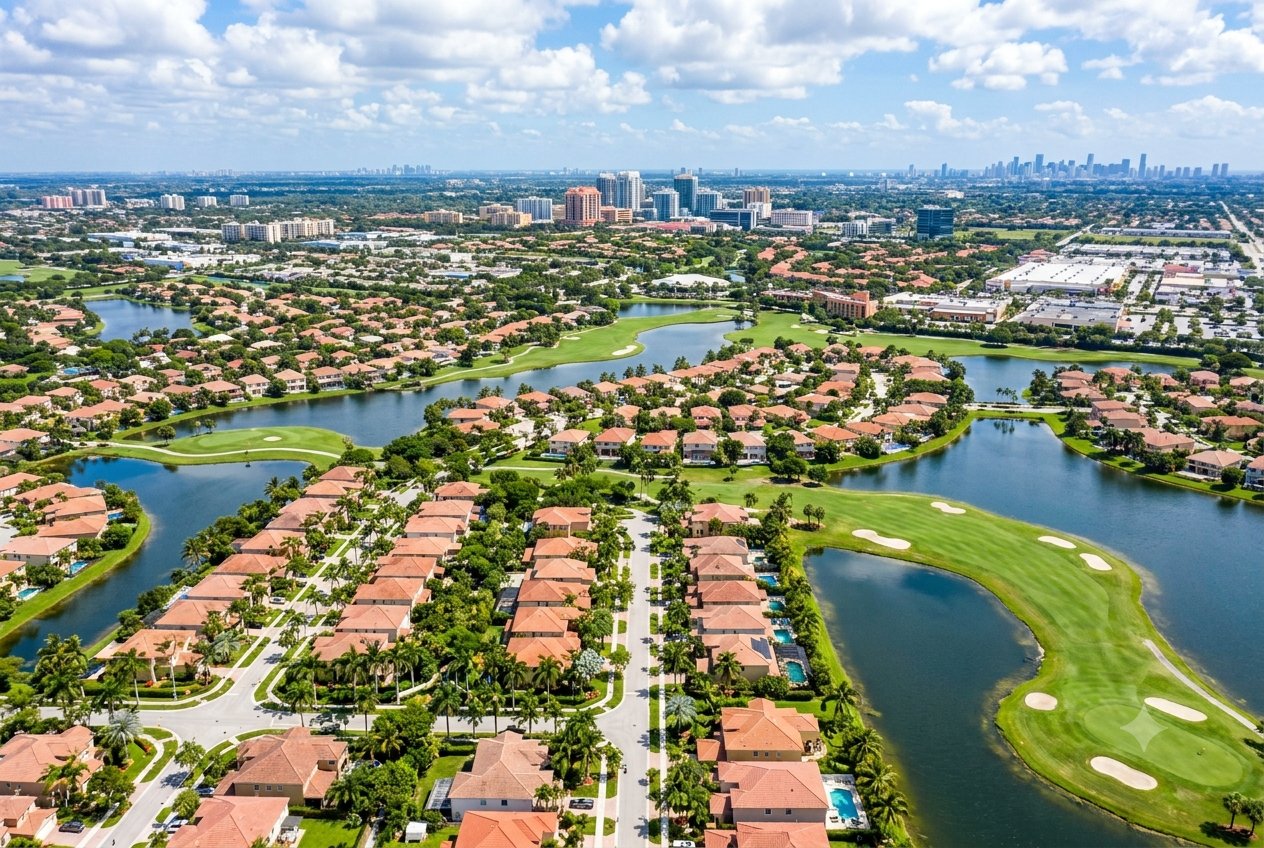
What County Is Doral, Florida In? Homebuyer's Guide
Wondering what county Doral, Florida is in? Here’s the complete real estate-focused guide for buyers, sellers, investors, and relocating families.
Introduction
If you've ever searched "what county is Doral, Florida in," chances are you're doing more than satisfying your curiosity. Whether you're relocating from another state, moving internationally, buying your first home, investing in South Florida real estate, or preparing to sell your property, understanding where Doral fits within the region can influence everything from property taxes and school options to commute times and long-term home values.
The short answer is simple: Doral is located in Miami-Dade County, Florida. But there is much more to the story than a county name. Doral has become one of South Florida's most desirable communities thanks to its strategic location near Miami International Airport, thriving business district, highly rated schools, diverse neighborhoods, and strong real estate demand.
In this complete guide, you'll discover not only what county Doral, Florida is in, but also why its location matters if you're buying, selling, or investing. We’ll cover Doral neighborhoods, property taxes, schools, lifestyle, transportation, and market trends so you can make a smarter real estate decision.
Quick Takeaways
- Doral is located in Miami-Dade County, Florida, one of the most important economic and population centers in the state.
- Doral’s location near Miami International Airport makes it attractive to relocating buyers, international buyers, business owners, and frequent travelers.
- The city offers diverse housing options, including condos, townhomes, gated communities, luxury homes, and new construction.
- Miami-Dade County services, property taxes, and public records matter when evaluating the true cost of buying or owning in Doral.
- Doral is popular with families because of its schools, parks, shopping, restaurants, and suburban-urban lifestyle.
- Investors like Doral because of rental demand, employment access, population growth, and long-term South Florida appeal.
- Choosing the right Doral neighborhood depends on your budget, commute, lifestyle, schools, HOA rules, and resale goals.
Quick Answer: What County Is Doral, Florida In?
Doral, Florida is located in Miami-Dade County. That is the direct answer, and it is the first thing every buyer, seller, investor, or relocating family should know when researching the city. Doral is not in Broward County, Palm Beach County, or Monroe County. It is part of Miami-Dade County, which places it within the Greater Miami area and connects it to one of the strongest economic regions in Florida.
This matters because the county influences more than just geography. If you are buying a home in Doral, Florida, Miami-Dade County impacts your property tax process, public school district, local government resources, infrastructure, transportation access, and public records. For sellers, the county also matters because buyers often compare Doral with other Miami-Dade cities like Miami, Coral Gables, Hialeah, Miami Springs, Kendall, and Sweetwater.
For relocation buyers, the county question is usually the first step. Once you know Doral is in Miami-Dade County, the next question becomes: Where exactly is Doral located within Miami-Dade? The answer is powerful from a real estate perspective. Doral sits west of Miami International Airport and offers strong access to major highways, employment centers, shopping, golf, and residential communities.
Here is the unique real estate angle most basic ranking pages miss: Doral’s value is not just that it is in Miami-Dade County. The real value is that it gives buyers a suburban lifestyle while staying close to the economic engine of Miami. That balance is why Doral continues to attract families, professionals, international buyers, and investors.
Where Is Doral Located in South Florida?
Doral is located in western Miami-Dade County, just west of Miami International Airport and northwest of the City of Miami. Its location gives residents access to major South Florida destinations without requiring them to live directly in Downtown Miami, Brickell, Coral Gables, or Miami Beach. For many buyers, that is the appeal. Doral feels more residential and planned, but it still keeps you connected to the action.
Major roads serving the area include the Dolphin Expressway, Palmetto Expressway, and Florida’s Turnpike. This makes Doral especially attractive for people who commute across Miami-Dade County or travel often for business. If you are moving to Doral, Florida from another state or country, this connectivity can be a major lifestyle advantage.
Doral is near several important neighboring communities, including Sweetwater, Hialeah, Miami Springs, Medley, and Fontainebleau. It is also within reasonable driving distance of Downtown Miami, Brickell, Coral Gables, Kendall, Miami Beach, and the broader South Florida region. That location gives buyers flexibility. You can live in a quieter planned city while still having access to employment centers, beaches, nightlife, universities, healthcare systems, and international travel.
For real estate investors, location is one of Doral’s strongest fundamentals. Properties near major employment corridors, airports, and transportation routes often benefit from consistent rental demand. Doral’s mix of residential communities and business activity gives it a practical advantage over some purely residential suburbs.
Unique insight: Doral is not a beach market, and that is actually part of its strength. Buyers choosing Doral are usually not buying for sand-and-surf lifestyle. They are buying for access, schools, convenience, newer housing, and international connectivity. That makes the buyer pool different from Miami Beach or Sunny Isles and can create more stable year-round demand.
Understanding Miami-Dade County
Miami-Dade County is one of the most recognized counties in Florida and serves as the center of the Greater Miami region. When people talk about Miami real estate, they are often talking about a wide range of cities and communities inside Miami-Dade County, not just the City of Miami itself. Doral is one of those municipalities, and its identity is tied closely to the county’s growth, infrastructure, and international economy.
Miami-Dade County includes major cities and areas such as Miami, Miami Beach, Coral Gables, Hialeah, Aventura, Homestead, Key Biscayne, Pinecrest, Doral, and many others. Each community has its own feel, price point, zoning, housing stock, and lifestyle. That is why buyers should not treat Miami-Dade as one single market. Doral real estate behaves differently than Brickell condos, Coral Gables historic homes, or Homestead single-family properties.
For buyers, Miami-Dade County matters because it is tied to property records, tax assessments, public school administration, transportation planning, public safety coordination, parks, libraries, and county-level services. If you are researching Doral property taxes explained in simple terms, you will eventually deal with county-level sources such as the Miami-Dade County Property Appraiser and Tax Collector.
For sellers, being in Miami-Dade County can help position Doral as part of a globally recognized market. Out-of-state and international buyers often know Miami first, then discover Doral as they refine their search for better schools, newer communities, more space, or easier airport access.
Unique insight: The county name carries global recognition. “Miami-Dade County” has more international weight than many local city names. A smart listing strategy for Doral should use both: highlight the specific neighborhood benefits of Doral while also leveraging the global pull of Miami-Dade County.
How Being in Miami-Dade County Benefits Doral Residents
Living in Doral means residents benefit from both city-level services and county-level resources. The City of Doral manages many local priorities, while Miami-Dade County provides broader infrastructure, public records, transportation resources, property tax systems, and regional services. For homeowners, this combination can be helpful because Doral offers a local municipal identity while still being plugged into a large county system.
One major benefit is access to transportation infrastructure. Doral’s location near major expressways and Miami International Airport supports both residential convenience and business growth. This is especially important for buyers who travel frequently, work in logistics, operate international businesses, or commute to other parts of Miami-Dade County.
Another benefit is access to countywide property information. Before buying a home, serious buyers can review property records, assessed values, exemptions, lot details, building information, and tax history through official Miami-Dade resources. That gives buyers a clearer understanding of the property before making a decision.
Doral also benefits from being part of a large employment region. Miami-Dade County has a diverse economy that includes aviation, logistics, finance, healthcare, tourism, international trade, real estate, hospitality, and professional services. This helps support demand for housing in cities like Doral, especially among professionals and business owners who want convenience without living in the urban core.
Unique insight: For buyers comparing Doral with cities outside Miami-Dade County, the question should not only be “Which city is nicer?” The better question is “Which location gives me the best daily access to work, schools, travel, and long-term resale demand?” Doral often scores well because its county location supports both lifestyle and liquidity.
Why Doral Has Become One of South Florida’s Most Desirable Cities
Doral’s rise has not happened by accident. The city has grown because it combines several high-demand features: a strategic location, strong business presence, international appeal, newer residential communities, shopping, schools, parks, and access to Miami’s economic engine. For many relocating buyers, Doral offers a more practical version of Miami living.
One of Doral’s biggest strengths is its international character. The city has long attracted residents and business owners from Latin America, the Caribbean, and other global markets. That gives Doral a multicultural energy that feels very connected to Miami while still maintaining its own identity. Restaurants, shops, schools, and businesses reflect that diversity.
Doral is also known for planned residential communities. Buyers can find condos, townhomes, villas, single-family homes, gated communities, and luxury residences. This variety makes the city attractive to first-time buyers, move-up families, downsizers, and investors. The housing stock often feels newer than in many older Miami-Dade neighborhoods, which is a major selling point for buyers who want modern layouts and community amenities.
The city also continues to invest in lifestyle amenities. Parks, shopping centers, restaurants, golf, entertainment, and mixed-use areas such as Downtown Doral contribute to its appeal. For families, that creates a strong everyday living environment. For sellers, it creates marketing power.
Unique insight: Doral is not just “near Miami.” It has become its own destination. That matters for real estate because buyers are no longer choosing Doral only as a compromise. Many are choosing it intentionally because it offers a specific lifestyle: international, convenient, family-friendly, and business-oriented.
Doral Real Estate Market Overview
The Doral real estate market is diverse, competitive, and highly influenced by location, community type, age of construction, school access, HOA fees, and proximity to major commercial areas. Buyers researching homes for sale in Doral will typically find condos, townhomes, single-family homes, and luxury gated options. Investors may also find opportunities in rental-friendly communities, though HOA rules must always be reviewed carefully.
Doral’s housing demand is supported by several buyer groups. Relocating families are drawn to schools and lifestyle. International buyers like the airport access and multicultural environment. Professionals value the commute and business access. Investors like the rental demand created by employment centers and relocation activity. Current homeowners benefit from being in a market that stays visible to both local and global buyers.
Compared with some older parts of Miami-Dade County, Doral often offers newer housing and more planned community environments. That can mean modern floor plans, community pools, gated entrances, clubhouses, fitness centers, and HOA-managed amenities. However, buyers need to evaluate HOA costs carefully. A lower purchase price does not always mean a lower monthly cost if HOA fees, insurance, taxes, and assessments are high.
For sellers, Doral’s advantage is its broad buyer pool. A well-positioned property can appeal to local move-up buyers, international buyers, relocation clients, and investors. The key is pricing correctly and marketing the property based on its strongest angle: school access, renovation quality, community amenities, rental potential, or commute convenience.
Unique insight: In Doral, the monthly payment story matters as much as the purchase price. Smart buyers should compare the full ownership cost: mortgage, taxes, insurance, HOA, maintenance, and potential assessments. Smart sellers should prepare answers to these questions before listing because informed buyers will ask.
Is Doral a Good Place to Buy Real Estate?
For many buyers, Doral is a strong place to buy real estate because it offers a rare mix of location, lifestyle, housing variety, and economic access. It is especially attractive for people who want to live in Miami-Dade County but prefer a more suburban, organized, and family-oriented environment than dense urban areas.
First-time homebuyers may like Doral because the city offers condos and townhomes that can be more approachable than larger single-family homes. These properties may provide access to desirable amenities and locations without requiring buyers to jump immediately into luxury price points. However, first-time buyers should pay close attention to HOA budgets, reserves, rental restrictions, insurance requirements, and monthly dues.
Relocating families often choose Doral because it can simplify daily life. The city offers schools, parks, shopping, restaurants, and major road access in one area. For families moving from another state or country, that convenience can reduce the friction of relocation. Instead of learning all of Miami-Dade at once, Doral gives them a defined community with strong access to the larger region.
Investors may also find Doral attractive because of rental demand from professionals, families, and international tenants. Still, investment decisions must be made property by property. Not every Doral property is automatically a good investment. HOA rental rules, monthly carrying costs, insurance, taxes, and realistic rental comps can make or break the numbers.
Unique insight: Doral is a good market, but it is not a lazy investor’s market. You cannot just buy anything and assume it will cash flow. The winners are buyers who understand community rules, tenant demand, and full monthly expenses before making an offer.
Popular Neighborhoods and Communities in Doral
Doral has several neighborhoods and communities that appeal to different buyer profiles. Some buyers want walkability and mixed-use convenience. Others want gated privacy, larger homes, or newer construction. Investors may focus on rental demand and HOA flexibility. Sellers should understand how their community compares because buyers do not evaluate all of Doral the same way.
Downtown Doral is popular with buyers who want a more urban-suburban lifestyle. It offers restaurants, shops, offices, residences, and a more walkable environment than many traditional suburban neighborhoods. Buyers interested in convenience and modern planning often place Downtown Doral high on their list.
Doral Isles is one of the city’s better-known gated communities, offering resort-style amenities and a strong residential feel. It often appeals to families and buyers looking for established community prestige.
Canarias and other newer communities attract buyers who want modern homes, newer finishes, and planned amenities. These areas can be especially attractive to relocating buyers who prefer newer construction and less immediate renovation work.
Midtown Doral offers a mix of residential and commercial convenience, which can appeal to professionals, investors, and buyers who value access to restaurants and services.
Other communities throughout Doral include townhome neighborhoods, condo buildings, villas, and single-family home areas with different HOA structures and price points. The right choice depends on your budget, lifestyle, commute, and long-term goals.
Unique insight: In Doral, neighborhood selection should start with monthly lifestyle, not just property type. Ask: Do you want walkability, gated amenities, lower HOA fees, school proximity, rental flexibility, or newer construction? The answer will narrow your search faster than simply asking for “homes in Doral.”
Schools Serving Doral
Schools are one of the biggest reasons families research Doral. Because Doral is located in Miami-Dade County, public schools serving the city are part of Miami-Dade County Public Schools. Buyers should always verify school assignments directly because boundaries can change, and school zones may vary by property address.
Doral offers access to public, charter, and private school options, which gives families flexibility. Many relocating buyers place school research near the top of their decision-making process, especially when comparing Doral with other South Florida cities. For sellers, school proximity and reputation can be powerful marketing points when properly presented.
For first-time buyers without children, schools still matter. Even if you do not plan to use the local school system, school demand can influence resale value and rental demand. Investors should also pay attention. Family-friendly rental properties near desirable schools may attract longer-term tenants who prioritize stability.
International buyers often ask about school systems early in the process. For them, understanding the difference between public, charter, magnet, and private school options can be confusing. A strong real estate advisor should help buyers understand where to research school assignments and how school access fits into the overall home search.
Unique insight: Do not buy a property in Doral based only on a school rating website. Ratings are useful, but they are not the whole story. Visit schools when possible, verify boundaries, ask about programs, and consider commute time. The best school on paper may not be the best daily fit for your family.
Property Taxes in Doral
If you are buying a home in Doral, Florida, property taxes should be part of your analysis from day one. Because Doral is in Miami-Dade County, property tax assessments, exemptions, and records are connected to county-level systems. Buyers can use the Miami-Dade County Property Appraiser to review assessed values, ownership records, and exemption information.
Property taxes are generally based on assessed value, exemptions, and millage rates. The Miami-Dade Tax Collector explains that ad valorem taxes are based on property value minus exemptions, then multiplied by the applicable millage rate. Some bills may also include non-ad valorem assessments. In plain English: your purchase price, exemptions, and local taxing authorities all matter.
One mistake buyers make is looking only at the current owner’s tax bill. That can be misleading. If the current owner has owned the property for many years or has exemptions, the tax bill may change after purchase. Buyers should estimate future taxes based on their expected purchase price and exemption eligibility.
Florida’s Homestead Exemption can help eligible permanent residents reduce taxable value on a primary residence. However, not every buyer qualifies. Investors, second-home buyers, and some international buyers may not receive the same benefit. That difference can materially affect monthly carrying costs.
Unique insight: In Doral, property taxes are not just a closing-table detail. They are part of the investment math. Before making an offer, buyers should estimate the post-purchase tax scenario, not just copy the seller’s current taxes. That one move can prevent major payment shock later.
Cost of Living in Doral
The cost of living in Doral, Florida is influenced heavily by housing, insurance, taxes, HOA fees, transportation, and lifestyle choices. For many households, the biggest cost will be the monthly housing payment. But the true cost of owning in Doral goes beyond principal and interest.
Buyers should calculate the full monthly ownership cost, including mortgage, property taxes, homeowner’s insurance, flood insurance if applicable, HOA dues, utilities, maintenance, and reserves for repairs. Condos and townhomes may have lower maintenance responsibilities, but HOA fees can be significant. Single-family homes may offer more independence but require more direct upkeep.
Insurance is another major factor in South Florida. Buyers should get quotes early, especially for older properties, properties with older roofs, or homes located in communities with specific insurance requirements. Wind mitigation features, roof age, impact windows, and property condition can all affect insurance pricing.
For renters and investors, cost of living affects rental demand. Tenants in Doral may be willing to pay for convenience, schools, and location, but rental pricing still has limits. Investors must compare expected rent against taxes, insurance, HOA fees, and maintenance.
Unique insight: Doral can be a strong market, but affordability must be evaluated monthly, not emotionally. A property that looks affordable online may become expensive after taxes, insurance, and HOA fees. The best buyers look at total cost before falling in love with the kitchen.
Transportation and Commuting
Transportation is one of Doral’s strongest selling points. The city is positioned near Miami International Airport and major expressways, making it practical for professionals, business owners, frequent travelers, and families with busy schedules. For many relocating buyers, commute access is one of the biggest reasons Doral makes the shortlist.
Major routes near Doral include the Dolphin Expressway, Palmetto Expressway, and Florida’s Turnpike. These roads connect residents to Downtown Miami, Brickell, Coral Gables, Hialeah, Kendall, Miami Springs, and other parts of Miami-Dade County. While traffic in South Florida can be intense, Doral’s location gives residents multiple route options depending on destination and time of day.
Airport access is another major advantage. Being close to Miami International Airport is valuable for international buyers, executives, airline employees, logistics professionals, and families who travel often. It is also a reason businesses choose Doral, which then supports local housing demand.
Public transportation options exist, but most Doral residents still rely heavily on cars. Buyers moving from walkable cities should understand this before purchasing. Some areas like Downtown Doral feel more walkable than traditional suburban neighborhoods, but Doral overall is still a car-oriented market.
Unique insight: In Doral, commute value is property-specific. A home that is technically “in Doral” may have a very different daily commute depending on which side of the city it sits on, nearby road access, school drop-off routes, and traffic patterns. Test the commute before buying.
Lifestyle and Things to Do in Doral
Doral offers a lifestyle that blends suburban comfort with Miami energy. Residents have access to parks, golf, restaurants, shopping, fitness centers, community events, and nearby entertainment throughout Miami-Dade County. For buyers who want convenience without living directly in the urban core, Doral checks a lot of boxes.
Shopping and dining are major lifestyle drivers. Areas such as CityPlace Doral and Downtown Doral provide restaurants, retail, entertainment, and social spaces. This matters for real estate because buyers increasingly want more than a house. They want a lifestyle ecosystem around the home.
Parks and recreation also play a major role. Families value green space, playgrounds, sports fields, trails, and community facilities. These amenities support quality of life and can influence long-term housing demand. Doral has continued investing in public spaces, which helps strengthen its appeal.
Golf has historically been part of Doral’s identity as well. The city is known for golf-related amenities and resort-style appeal, which adds to its luxury and lifestyle branding.
For international buyers, Doral’s multicultural dining and community feel can make the transition to South Florida easier. For current homeowners, the lifestyle growth can support resale positioning when it is time to list.
Unique insight: Doral’s lifestyle is practical luxury. It is not only about flashy amenities. It is about making daily life easier: school, coffee, dinner, groceries, parks, airport, and work access all within a manageable radius.
Business, Employment, and Economic Growth
Doral is one of Miami-Dade County’s most important business-friendly cities. Its proximity to Miami International Airport, major highways, and logistics corridors has made it attractive to companies involved in trade, transportation, warehousing, hospitality, finance, and professional services. This business base supports the housing market because jobs and housing demand are closely connected.
For buyers, this means Doral is not just a bedroom community. It has its own employment ecosystem. Many people live and work in or near the city, while others use Doral as a convenient home base for accessing jobs throughout Miami-Dade County.
For investors, business activity is a major reason to study Doral. Rental demand often follows employment. Corporate workers, relocating executives, entrepreneurs, and international professionals may all look for housing in the area. This can support both long-term rental demand and resale liquidity.
For sellers, Doral’s business environment can be a marketing advantage. A property near employment centers, restaurants, highways, and airport access may appeal to a broader buyer pool than a similar home in a less connected location.
Unique insight: Doral’s real estate market is supported by both lifestyle demand and economic demand. That is a strong combination. Some cities are attractive mainly because they are pretty. Doral is attractive because it is useful. In real estate, useful locations tend to stay relevant.
Safety and Quality of Life
Quality of life is one of the biggest reasons buyers research Doral. The city offers a planned community feel, local services, parks, schools, shopping, restaurants, and access to Miami-Dade’s broader amenities. For families and relocating buyers, that combination can make Doral feel like a smoother entry point into South Florida.
Safety is always a major concern for buyers, but it should be researched carefully. Instead of relying only on general online crime maps, buyers should review local data, visit communities at different times of day, speak with residents, and evaluate specific neighborhoods. Safety can vary by block, property type, and surroundings.
Quality of life also includes noise, traffic, HOA rules, parking, commute patterns, school drop-off logistics, and weekend convenience. These factors rarely appear in basic search results, but they matter deeply once you live there.
Doral’s community events, parks, and family-oriented amenities add to its appeal. The city has a strong residential identity even though it is close to major commercial and logistics areas. That balance is part of what makes it different from more purely urban or purely suburban markets.
Unique insight: The best Doral purchase is not always the newest or most expensive property. It is the property that matches your actual weekly routine. Where do you work? Where do your kids go to school? Where do you shop? Where do you spend weekends? The right home should make your normal life easier.
Should You Buy or Sell a Home in Doral?
If you are thinking about buying in Doral, start with your goals. Are you buying a primary residence, second home, investment property, or future relocation base? Each goal requires a different strategy. A family buyer may prioritize schools and community amenities. An investor may prioritize rental rules and net income. A first-time buyer may focus on affordability and HOA stability.
Buyers should get pre-approved early, review total monthly costs, compare neighborhoods, verify school boundaries, inspect HOA documents, and review property tax estimates. In competitive segments, preparation matters. The best properties can move quickly when priced correctly.
If you are selling in Doral, your strategy should focus on positioning. Buyers need to understand why your property is worth choosing over other homes in the city. That may come down to renovation quality, community amenities, floor plan, location, school access, lower HOA fees, or rental potential. Professional photos, strong pricing, and clear property information are non-negotiable.
Current Doral homeowners should also pay attention to timing and competition. If similar homes are sitting, pricing needs to be sharp. If inventory is low in your specific community, you may have more leverage.
Unique insight: Doral is not a market where generic marketing wins. Buyers are informed, international, and comparison-driven. A seller needs more than “beautiful home in great location.” The listing must explain the numbers, lifestyle, and community advantage clearly.
Frequently Asked Questions
1. What county is Doral, Florida located in?
Doral is located in Miami-Dade County, Florida. It sits west of Miami International Airport and is part of the Greater Miami area. This location gives residents access to major highways, county services, employment centers, and South Florida lifestyle amenities.
2. Is Doral part of Miami?
Doral is not the same as the City of Miami. It is its own city located within Miami-Dade County. Many people associate Doral with Miami because it is part of the Greater Miami area and sits close to Miami International Airport.
3. Is Doral a good place to buy a home?
Yes, Doral can be a strong place to buy a home, especially for buyers who value schools, location, airport access, newer communities, and a suburban lifestyle within Miami-Dade County. Buyers should still review taxes, insurance, HOA fees, and community rules before purchasing.
4. Are Doral property taxes different from other Miami-Dade cities?
Property taxes in Doral are calculated through the Miami-Dade County property tax system, but the final bill depends on assessed value, exemptions, millage rates, and any applicable assessments. Buyers should estimate future taxes based on purchase price, not only the current owner’s tax bill.
5. Is Doral good for real estate investment?
Doral can be attractive for real estate investors because of its business base, rental demand, airport access, and population growth. However, investors must review HOA rental restrictions, insurance, taxes, monthly fees, and realistic rental comps before buying.
Conclusion
By now, you have a clear answer to the question, "What county is Doral, Florida in?" Doral is located in Miami-Dade County, Florida. More importantly, you now understand why that matters. Doral’s county location connects it to one of Florida’s strongest economic regions, major transportation networks, international business activity, public resources, and a powerful real estate market.
For relocating buyers, Doral offers convenience, schools, parks, shopping, dining, and access to Miami without requiring you to live in the middle of the urban core. For first-time buyers, the city offers condos, townhomes, and communities that can provide a practical entry point into Miami-Dade real estate. For investors, Doral offers demand drivers like employment, airport access, international appeal, and rental activity. For current homeowners, the city’s growth and visibility can create strong selling opportunities when positioned correctly.
If you are considering buying, selling, or investing in Doral, the smartest move is to look beyond the surface. Compare neighborhoods, understand property taxes, review HOA rules, evaluate schools, and study the true monthly cost of ownership.
At Madriz Collective, we help buyers, sellers, and investors make data-driven real estate decisions across South Florida. If Doral is on your radar, reach out today to compare neighborhoods, evaluate your property value, or explore the best opportunities available in the market.
We'd Love to Hear From You
We hope this guide helped answer your question about what county Doral, Florida is in and gave you a clearer understanding of the city’s real estate market, neighborhoods, taxes, schools, and lifestyle.
What matters most to you when choosing a community: schools, commute, lifestyle, investment potential, or long-term resale value?
Share your thoughts in the comments, and if you found this article helpful, send it to a friend, family member, or client researching a move to South Florida.
